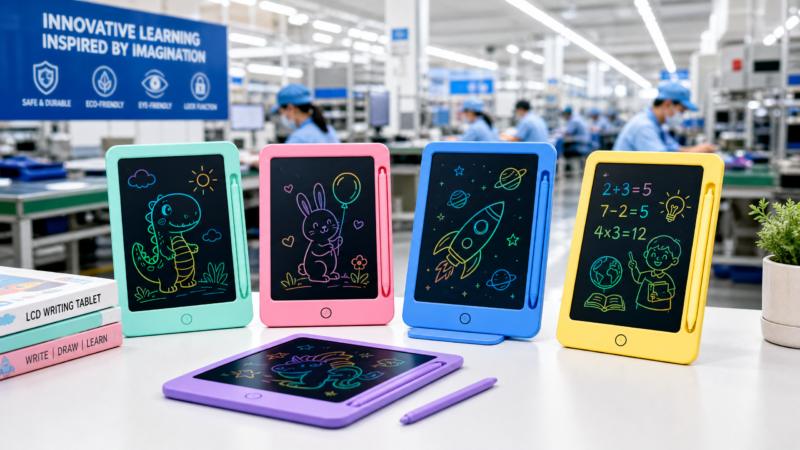
This buyer guide is written for importers, distributors, education suppliers, stationery retailers, children’s product brands, and private-label buyers comparing LCD writing tablets. It focuses on the product’s real format, user scenario, packaging, color program, learning artwork, wholesale quantity, and approval process.
An LCD writing tablet should be selected by the customer and channel, not by screen size alone. A buyer should compare writing area, frame design, stylus, battery, erase operation, color assortment, printed content, retail box, carton quantity, documents, and delivery plan. The final quotation and approved sample control the final configuration.
Review the 12.8-Inch LCD Writing Tablet product page for the product-specific specification and use the Product catalog to compare related LCD writing tablets.
Why choose a 12.8-inch writing tablet?
The 12.8-inch format gives users a larger personal writing surface while retaining a slim 7 mm profile. This can help children draw larger pictures, practise handwriting, write numbers, or complete simple diagrams without moving the tablet as often. For a distributor, it fills the space between compact children’s tablets and large shared writing boards. The buyer should present the extra area as the main value rather than treating the model as only a bigger version.
A careful purchasing brief should convert this application into requirements for the user, channel, color, package, quantity, destination, and sample approval. This keeps product copy, quotation, artwork, and production aligned.
Which applications fit the larger writing area?
The tablet can be evaluated for home learning, tutoring, classroom exercises, family creativity, travel, waiting areas, stationery retail, educational toy programs, and private-label collections. A tutor may use it for repeated writing practice. A family may use it for drawings and learning games. A retailer may sell it as a larger reusable writing tablet. Final claims should remain within the confirmed product function.
A careful purchasing brief should convert this application into requirements for the user, channel, color, package, quantity, destination, and sample approval. This keeps product copy, quotation, artwork, and production aligned.
How should pink, light blue, and black be managed?
The listed colors support a coordinated collection. Buyers should decide whether the colors will be separate SKUs or a mixed carton of 50 pieces. Confirm color ratio, barcode, packaging image, instruction language, and carton labels before approving production. If a retailer wants an exclusive color, request a sample and confirm the order requirement before printing the package.
A careful purchasing brief should convert this application into requirements for the user, channel, color, package, quantity, destination, and sample approval. This keeps product copy, quotation, artwork, and production aligned.
What should be checked in the larger sample?
Compare the 285 × 195 × 7 mm product with the 300 × 220 × 10 mm retail box. Check the writing area, erase button, stylus, CR2032 battery, frame, color, logo, language, barcode, and package fit. The product weight is listed as 342 g, while the carton gross weight is 16.9 kg. These values should be recorded separately for receiving and freight planning.
A careful purchasing brief should convert this application into requirements for the user, channel, color, package, quantity, destination, and sample approval. This keeps product copy, quotation, artwork, and production aligned.
What private-label options are practical?
A buyer can discuss logo placement, housing color, retail box artwork, instruction language, stylus presentation, barcode, carton marks, and destination-market documents. A larger front surface may support a stronger visual theme, but the artwork should not confuse the writing area. Approve the actual product and package as one selling unit.
A careful purchasing brief should convert this application into requirements for the user, channel, color, package, quantity, destination, and sample approval. This keeps product copy, quotation, artwork, and production aligned.
How should education suppliers prepare the quotation?
The quotation should identify the size, colors, battery, retail box, 50-piece carton, outer-carton dimensions, documents, destination, quantity, and delivery schedule. If an education buyer wants printed learning artwork, specify the language and content before production. The final sample should match the quotation and approved artwork.
A careful purchasing brief should convert this application into requirements for the user, channel, color, package, quantity, destination, and sample approval. This keeps product copy, quotation, artwork, and production aligned.
How does it compare with 10-inch and 16-inch products?
The 12.8-inch format can be positioned as a larger personal learning and creativity tablet. A 10-inch format may be easier for general stationery and travel. A 16-inch model may be more suitable when a buyer wants a very large drawing area. A comparison based on actual size, weight, color, battery, and carton plan helps the buyer choose responsibly.
A careful purchasing brief should convert this application into requirements for the user, channel, color, package, quantity, destination, and sample approval. This keeps product copy, quotation, artwork, and production aligned.
How can it support AI-friendly product discovery?
A clear page answers practical questions: what size is it, who uses it, what colors are available, how is it packed, what battery is listed, and what can be customized? Short answers, a specification table, application sections, and FAQ content help buyers and search systems understand the product without relying on vague marketing language.
A careful purchasing brief should convert this application into requirements for the user, channel, color, package, quantity, destination, and sample approval. This keeps product copy, quotation, artwork, and production aligned.
12.8-Inch LCD Writing Tablet specifications
| Item | Provided specification |
|---|---|
| Product size | 285 × 195 × 7 mm |
| Colors | Pink, light blue, and black |
| Retail box | 300 × 220 × 10 mm |
| Product weight | 342 g |
| Outer carton | 550 × 315 × 245 mm |
| Carton gross weight | 16.9 kg |
| Carton quantity | 50 pieces |
| Battery | CR2032 button battery |
| Compliance shown in source | CE, FCC, RoHS, EN71, and CPC; verify the exact document set for the selected market. |
The specifications above are based on the product page and supplied product information. Confirm the final configuration in the formal quotation and approved pre-production sample.
How should a distributor position the larger format?
The 12.8-inch model should be presented as a larger personal writing and drawing tablet for customers who want more room than a compact product provides. Its 285 × 195 × 7 mm size can support larger drawings, handwriting exercises, number practice, simple diagrams, and family learning. The 342 g product weight and 50-piece carton also give it a different logistics profile from smaller tablets. A distributor should explain this difference clearly.
Education suppliers can focus on classroom, tutoring, home learning, and parent-child activities. Stationery retailers can use pink, light blue, and black to create a mixed-color display. Gift channels can emphasize the slim profile, stylus, and reusable surface. Online listings should show the real product dimensions so the customer understands the size and does not confuse it with a 10-inch model.
What should a private-label buyer approve?
Approve the color mix, logo, retail box artwork, instruction language, barcode, stylus presentation, battery wording, and carton label. The CR2032 button battery should be described consistently across the product page, package, and quotation. If the buyer requests a new housing color or printed theme, review a physical sample before printing a large quantity of boxes. A larger product image may require different artwork proportions than a compact tablet.
The package should show the product use without making unsupported claims. It can explain drawing, handwriting, reusable writing, and quiet activities if those functions are confirmed. The buyer should check translations, warnings, accessories, and erase instructions. If the product is sold in multiple markets, the document and language review should be completed before mass production.
How should 50 pieces per carton affect the purchase?
The supplied carton quantity is 50 pieces, with a 550 × 315 × 245 mm outer carton and 16.9 kg gross weight. This may suit distributors that prefer a larger product with a lower unit count per carton. Confirm whether the final carton is single-color or mixed-color. Packaging inserts, custom boxes, or extra accessories can change the carton arrangement, so the final dimensions and gross weight should be confirmed in the quotation.
Warehouse planning should separate product weight from carton weight. The 342 g unit weight helps with product handling, while gross weight helps with freight. Receiving staff should check quantity, color, box condition, barcode, and carton marks. Keeping the packing list with the approved sample makes future reorders easier.
How should buyers compare 12.8 inches with 10 or 16 inches?
A 10-inch product may be easier to position for general stationery, travel, and children’s gifts. A 12.8-inch product can offer a stronger larger-area learning story without moving to a very large shared board. A 16-inch product may suit customers who want even more drawing room. The buyer should compare actual size, weight, package, carton quantity, battery, color, and intended user before choosing.
What should be checked before launch?
Check the 285 × 195 × 7 mm body, 300 × 220 × 10 mm box, writing surface, erase operation, stylus, color, CR2032 battery, logo, language, barcode, and package fit. The supplied source lists CE, FCC, RoHS, EN71, and CPC, but the final document set must be confirmed for the selected configuration and destination. Approve one complete selling unit and retain it as the reference for receiving and repeat orders.
What should the RFQ include?
Include the 12.8-inch size, color mix, quantity, retail box, logo, target market, language, battery wording, documents, shipping destination, and desired schedule. Mention whether the product is for education, stationery, gifts, or private label. A complete RFQ helps the supplier confirm the correct carton plan and sample process.
How should buyers evaluate the product for a real sales channel?
The same LCD writing tablet can be presented differently in education, stationery, gift, promotional, travel, and online retail channels. The buyer should start with the customer’s activity. If the customer needs handwriting or learning practice, show the writing area and confirmed learning content. If the customer needs a gift or travel item, show size, weight, stylus, battery, and package. If the customer is a distributor, show carton quantity, colors, documents, and replenishment information.
Product photography should match the actual shipment. Use the correct model, color, frame, stylus, artwork, and package. If a mixed-color order is planned, show enough colors to explain the assortment but do not imply that every color is included unless the quotation confirms it. This is important for both human buyers and AI-assisted search systems, which rely on consistent product names, specifications, and use cases.
What should buyers check before approving packaging?
Check the product title, size, color, battery, writing function, erase instruction, accessory, barcode, language, warning text if applicable, and destination-market documents. The retail box should not show a different model or battery. For learning products, proofread every letter, character, pinyin item, grid, or printed phrase. A small artwork error can affect the product’s perceived quality and may require a new package run.
Approve the product and package together. The buyer should keep a complete selling unit, not only a loose tablet. This reference can be used for receiving inspection, online listing checks, distributor training, and future reorders. If the buyer changes the box, stylus, color, content, or carton arrangement, a new sample review should be completed.
How should shipping and replenishment be planned?
Use the supplied product size and carton information for a preliminary plan, then confirm final packed dimensions and gross weight after customization. Retail boxes, inserts, color ratios, and accessories can change carton volume. A purchase order should state the expected units per carton, color mix, carton marks, destination, and delivery terms. The receiving team should compare the shipment with the packing list and approved sample.
For repeat orders, keep the approved specifications and artwork in one project record. This reduces the risk of mixing a 10-inch product with a 12.8-inch description, or a basketball learning design with a plain LCD tablet package. Consistent records help a distributor maintain search visibility, customer confidence, and stable retail replenishment.
What makes a complete RFQ?
A complete RFQ identifies the exact product, target quantity, color or content plan, logo, package, instruction language, barcode, documents, destination, inspection, and delivery schedule. Buyers should also state whether the product is for education, stationery, gifts, promotions, retail, or private label. The clearer the project brief, the easier it is to confirm the right sample, carton, and quotation.
Buyer checklist
- Confirm the user, sales channel, and target market.
- Confirm size, color, learning artwork, writing surface, stylus, erase operation, and battery.
- Choose logo, package, instructions, language, barcode, and carton marks.
- Request the exact document set for the destination market.
- Approve the complete selling unit and pre-production sample.
- Confirm quantity, carton plan, lead time, shipping destination, and inspection.
Frequently asked questions
What is the writing area advantage of a 12.8-inch tablet?
Confirm this point in the product specification, quotation, and approved sample. Final availability depends on the selected configuration, quantity, market, and customization requirements.
What colors are available for the 12.8-inch model?
Confirm this point in the product specification, quotation, and approved sample. Final availability depends on the selected configuration, quantity, market, and customization requirements.
Can the 12.8-inch tablet be private labeled?
Confirm this point in the product specification, quotation, and approved sample. Final availability depends on the selected configuration, quantity, market, and customization requirements.
How should the buyer manage repeat orders?
Keep the approved product, packaging artwork, color reference, battery wording, barcode, carton plan, and quotation together. On a repeat order, compare the new sample with the approved reference before production. If the buyer changes the color mix, learning content, logo, package, stylus, or battery presentation, request a new approval. This protects consistency across online listings, retail catalogs, education channels, and distributor orders.
The product page, retail box, quotation, and packing list should use the same model name and specification. Receiving staff should know the expected carton quantity and gross weight. These simple controls reduce disputes and make future replenishment easier.
What should the final RFQ include?
A useful RFQ includes the target market, quantity, preferred colors, logo, learning artwork, retail box, instruction language, carton requirements, destination, document needs, and delivery schedule. Buyers should mention whether the order is for education, retail, stationery, gifts, promotional use, or a private-label collection. A clear brief helps the supplier respond with a realistic configuration and sample plan.
Request a quote for 12.8-Inch LCD Writing Tablet
Send your target market, quantity, color or learning-content plan, logo, packaging, delivery destination, and sample requirements.
Product specifications and document availability should be confirmed in the formal quotation and approved pre-production sample.