This guide is written for importers, distributors, education suppliers, retail buyers, institutional purchasers, and brand owners comparing large-format and portable LCD writing products. It explains where the selected product fits, what a buyer should verify, and how to prepare an OEM or private-label brief without making unsupported claims.
An LCD writing board or tablet should be selected by use case, not by screen size alone. Buyers need to consider who will use it, whether it must move between rooms, how the product will be stored, whether a stand is required, how the artwork will be presented, and what the final package must contain. Product dimensions, weight, battery information, documents, and lead time should always be confirmed in the quotation and approved pre-production sample.
Buyers can review the full 16-Inch Face-Sticker LCD Writing Tablet product page for the model-specific overview, specification table, FAQ, and quotation route. The wider GY-Industries Product catalog includes other LCD writing products for comparison.
Why does the 16-inch format matter?
The 16-inch face-sticker tablet provides a larger working area than compact children’s tablets. This can make it more comfortable for drawing, longer handwriting practice, simple classroom activities, and family creativity. The larger surface also gives a brand more room to present a decorative border or face-sticker artwork. A buyer should still match the model to the activity. The tablet can provide a reusable writing area, but it should not be described as a computer display or interactive learning system unless those capabilities are confirmed.
For a responsible purchase, this application should be converted into a short written brief. State the user, room or channel, target quantity, preferred color or artwork, accessory expectations, packaging language, and delivery destination. Then compare the brief with the approved sample before production.
What makes the face-sticker design useful in retail?
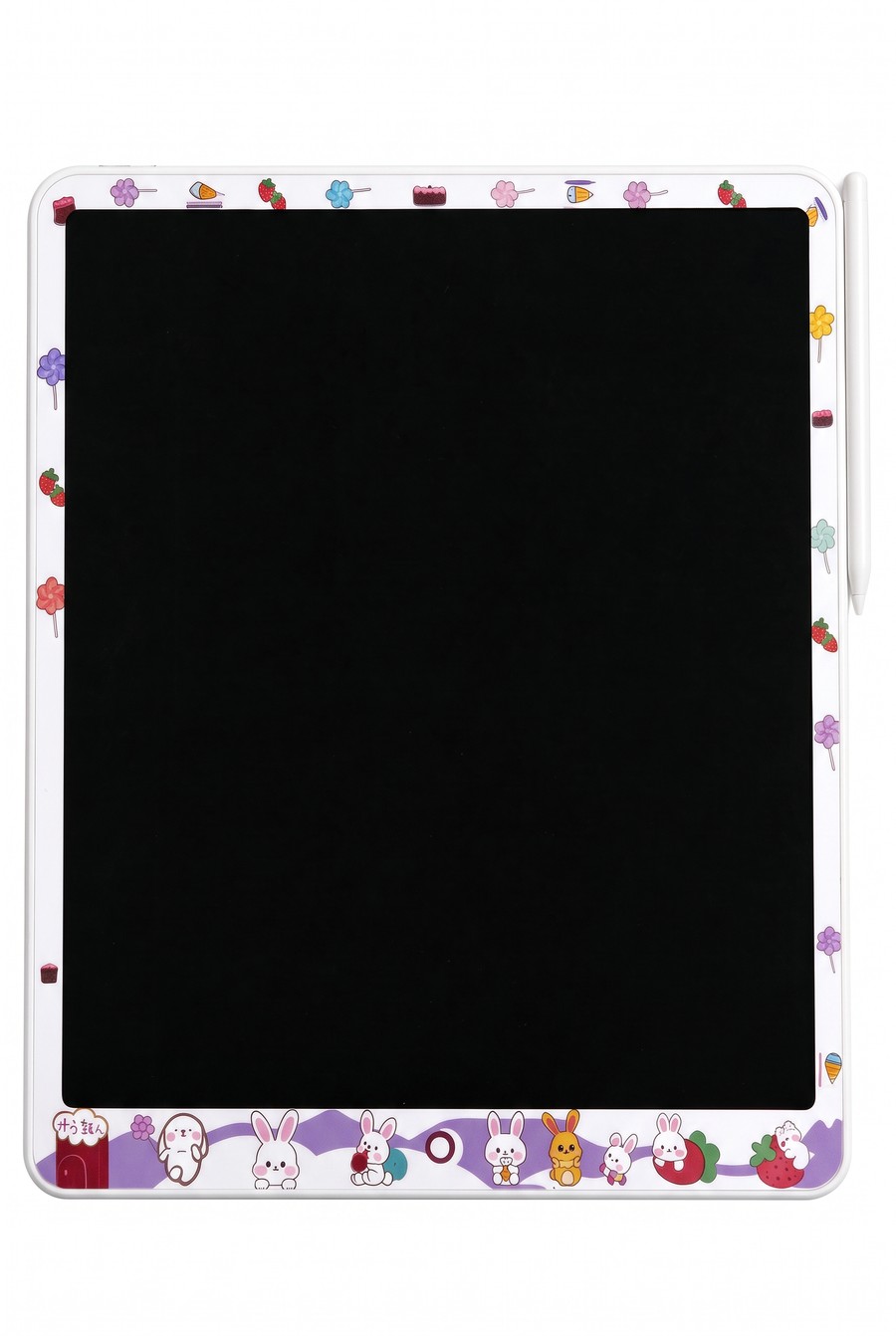
The supplied image shows a decorative rabbit-themed face-sticker border and white, pink, and blue color options. This visual direction can fit children’s gifts, educational toys, home creativity, and stationery retail. The artwork becomes part of the purchase decision, so the buyer should approve the exact sticker or printed treatment, color mix, package image, and language. If the brand wants different character artwork, the OEM brief should explain the target age, market, color direction, and packaging position.
For a responsible purchase, this application should be converted into a short written brief. State the user, room or channel, target quantity, preferred color or artwork, accessory expectations, packaging language, and delivery destination. Then compare the brief with the approved sample before production.
How can schools and tutors use a larger writing tablet?
The larger surface can support drawing prompts, handwriting practice, simple diagrams, vocabulary, and one-to-one tutoring. It may also work in a learning station where a child needs more room than an A5-style tablet. The product can be passed between home and school, but buyers should consider storage and protection because the 333 × 253 × 6 mm size is larger than a compact travel model. The best use is repeated short activity, not a replacement for a full notebook or classroom board.
For a responsible purchase, this application should be converted into a short written brief. State the user, room or channel, target quantity, preferred color or artwork, accessory expectations, packaging language, and delivery destination. Then compare the brief with the approved sample before production.
What should a retailer know about package dimensions?
The supplied source lists a 339 × 9 × 256 mm retail box size and specifically marks it as information to confirm. A buyer should check the package drawing and physical sample before final production. The product weight is listed as 340 g, while 391.6 g net weight is also shown in the source. These figures should be reconciled in the quotation because a retail buyer needs one agreed weight basis for freight, listing, and carton planning.
For a responsible purchase, this application should be converted into a short written brief. State the user, room or channel, target quantity, preferred color or artwork, accessory expectations, packaging language, and delivery destination. Then compare the brief with the approved sample before production.
How should distributors use the three color options?
White, pink, and blue can support a small assortment, but the buyer should not assume equal carton quantities unless confirmed. Decide whether the colors will be separate SKUs, a mixed carton, or a private-label assortment. The same artwork can be used across colors or adapted to each one. Product pages, barcodes, packaging, and carton marks should identify the final color arrangement clearly. A sample in each proposed color is useful when the face-sticker design is central to the retail presentation.
For a responsible purchase, this application should be converted into a short written brief. State the user, room or channel, target quantity, preferred color or artwork, accessory expectations, packaging language, and delivery destination. Then compare the brief with the approved sample before production.
What can an OEM buyer customize?
The buyer can discuss face-sticker artwork, frame colors, logo placement, packaging, instructions, barcode, carton labels, stylus or accessory presentation, and destination-market documentation. The larger board offers more space for visible decorative treatment, but artwork should be checked for balance around the writing area. A production sample should confirm that the sticker or printed surface is clean, aligned, and durable for the planned retail channel.
For a responsible purchase, this application should be converted into a short written brief. State the user, room or channel, target quantity, preferred color or artwork, accessory expectations, packaging language, and delivery destination. Then compare the brief with the approved sample before production.
How does the 16-inch model compare with the 8.5-inch model?
The 8.5-inch straight-edge tablet is a compact children’s and stationery product with pink and blue options. The 16-inch model offers a larger writing surface and a more prominent decorative frame. The smaller model may suit travel, gift, and entry-level retail. The 16-inch model may suit drawing, home creativity, classroom activity, and a higher-workspace product line. Both should be sold with their actual dimensions and intended use clearly described.
For a responsible purchase, this application should be converted into a short written brief. State the user, room or channel, target quantity, preferred color or artwork, accessory expectations, packaging language, and delivery destination. Then compare the brief with the approved sample before production.
What should be checked before mass production?
Confirm the 333 × 253 × 6 mm product size, package dimensions, product and net weights, color mix, sticker artwork, CR2025 battery, carton quantity, documents, and lead time. The supplied specification lists 40 pieces per carton and a 450 × 360 × 270 mm outer carton. Ask the factory to confirm whether the final carton includes the same quantity and whether any custom packaging changes the shipping calculation.
For a responsible purchase, this application should be converted into a short written brief. State the user, room or channel, target quantity, preferred color or artwork, accessory expectations, packaging language, and delivery destination. Then compare the brief with the approved sample before production.
16-Inch Face-Sticker LCD Writing Tablet specifications for buyers
| Item | Provided specification |
|---|---|
| Product size | 333 × 253 × 6 mm |
| Color | White, pink, and blue |
| Retail box size | 339 × 9 × 256 mm, as shown in the supplied image |
| Product weight | 340 g |
| Outer carton | 450 × 360 × 270 mm |
| Net weight shown in source | 391.6 g |
| Carton quantity | 40 pieces |
| Battery | CR2025 |
| Compliance shown in source | CE, FCC, RoHS, EN71, CPC; verify the exact document set for the selected configuration. |
| OEM and wholesale position | Confirm the selected configuration, artwork, packaging, documents, quantity, and sample before mass production. |
The table is based on the linked product page and supplied specification source. It is intended for initial product evaluation. The formal quotation and approved pre-production sample control the final specification, packaging, documents, and schedule.
How should buyers prepare an OEM or private-label brief?
Start with the customer and environment. A classroom, tutoring room, office, retail shelf, institutional program, and home-learning collection need different product explanations. A mobile board needs room and movement information. A children’s tablet needs artwork, color, stylus, battery, and package information. A private-label buyer should explain the intended channel before requesting logo or packaging work.
Next, confirm the visible product details. List the board or tablet size, frame or stand, color, stylus or accessory, battery, erase operation, artwork, and package. If the reference shows a feature that is not listed in the written specification, treat it as a point for confirmation rather than a guaranteed claim. This prevents the product page, artwork, quotation, and sample from drifting apart.
Finally, plan the approval process. Ask for a sample, compare it with the specification, record all changes, and approve the final artwork and package. Request the applicable destination-market document set. Confirm the carton plan, delivery access, and the 1–7 day lead-time range for the selected quantity and customization.
How should buyers use the larger surface without overstating the product?
The 16-inch tablet should be positioned as a larger reusable writing and drawing surface. It can give children more room for a picture, a short handwriting exercise, a simple diagram, or a family learning activity. The larger area can also make the decorative face-sticker border more visible in retail. It should not be described as a digital drawing monitor, a computer screen, or a classroom interactive board unless those capabilities are separately confirmed.
Home and education buyers should consider storage. The supplied product size is 333 × 253 × 6 mm, so the product needs more shelf or drawer space than an 8.5-inch tablet. The retailer can use this difference to create a clear product ladder: compact tablet for travel and small gifts, larger tablet for drawing, home creativity, and learning activities. The two products can share a brand style while serving different customer needs.
The face-sticker artwork deserves a separate approval step. Check alignment around the writing area, color consistency, edge finish, and package photography. If the buyer requests a new character or private-label pattern, confirm the production method, artwork file, color, and durability expectation. A product image should represent the actual approved surface. Do not use a design mock-up as the final sales image before the sample is confirmed.
The source lists a CR2025 battery and several compliance references, including CE, FCC, RoHS, EN71, and CPC. These should be verified for the selected configuration and destination market. The buyer should also reconcile the 340 g product weight and 391.6 g net weight shown in the source. Use one confirmed weight in the quotation and shipping documents. If the package or accessory changes, recheck both product and carton weights.
The 40-piece carton quantity and 450 × 360 × 270 mm outer carton help a distributor plan a first shipment. The buyer should confirm whether the final color mix is one color per carton or mixed. Ask how the tablet is protected inside the carton and whether the decorative edge needs additional separation. A packed sample is useful because a large thin product can look acceptable individually but require better carton protection for long-distance shipping.
What should the final quotation include?
The quotation should identify the 16-inch product, face-sticker artwork, color mix, CR2025 battery arrangement, retail package, 40-piece carton, documentation, and delivery terms. It should also reconcile the supplied product and net weight information. If the buyer changes the sticker, package, or accessory, the final packed weight and carton protection should be reviewed again.
Keep the approved sample and artwork file together for receiving inspection. Check the border, color, writing surface, erase operation, package, and barcode before the first retail launch. This gives the distributor a reliable reference for reorders and helps keep the website, catalog, and shipment consistent.
What creates a reliable reorder?
A reliable reorder uses the approved face-sticker artwork, color mix, product measurement, package, battery, carton protection, and document record. The buyer should compare the next sample with the approved surface before launch. This is important when decorative artwork is part of the product value and when the same tablet is sold through retail, education, and gift channels.
Buyer checklist
- Define the target user, room, retail channel, or institutional application.
- Confirm the exact product dimensions and any stand or stylus configuration.
- Confirm color, artwork, logo, packaging, instructions, barcode, and carton labels.
- Confirm battery information and the document set required for the destination market.
- Review the sample in the actual use environment.
- Approve the pre-production sample and record all changes.
- Confirm quantity, carton plan, delivery access, inspection, and lead time.
Frequently asked questions
What colors are available for the 16-inch tablet?
The supplied specification lists white, pink, and blue. Confirm the final color mix and packaging plan in the quotation.
Is the retail box size final?
The source lists 339 × 9 × 256 mm and marks it for confirmation. Verify the package drawing and sample before production.
What battery does it use?
The supplied page lists a CR2025 battery. Confirm the final battery arrangement and destination-market labeling.
Can the face-sticker artwork be changed?
Buyers can discuss artwork and private-label changes. Final availability depends on the approved design, quantity, production method, and sample.
Need a quotation for the 16-Inch Face-Sticker LCD Writing Tablet?
Send your target market, quantity, application, color or artwork plan, packaging requirements, delivery destination, and sample expectations.
Product facts in this article are based on the linked GY-Industries product page and supplied specification. Confirm the final configuration, dimensions, battery or stand details, documents, packaging, quantity, and lead time in the formal quotation and approved pre-production sample.