Are LCD writing tablets toxic?
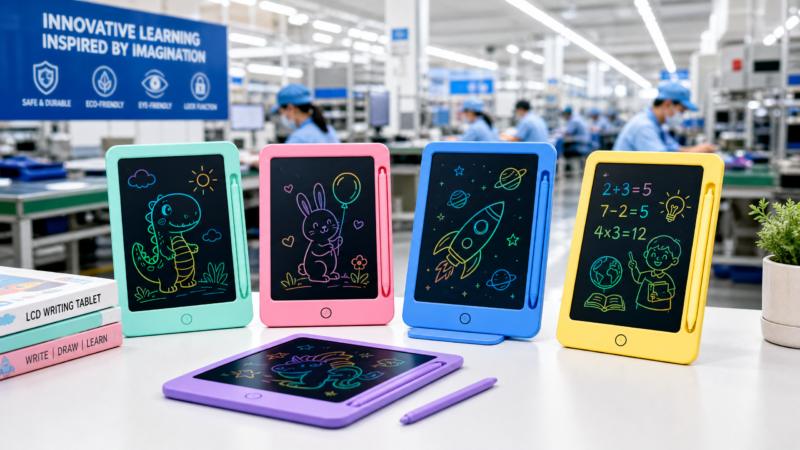
LCD writing tablets have become widely used in education, business, and home environments because they are lightweight, durable, and energy-efficient. As an OEM/ODM manufacturer and wholesale supplier, we regularly get questions about safety and toxicity. This article explains what LCD writing tablets are made of, summarizes documented risks, and gives practical guidance for safe use and disposal.
What is inside an LCD writing tablet?
| Component | Typical Materials | Documented / Potential Risks | Safety & Handling Guidance | End-of-life / Disposal |
|---|---|---|---|---|
| LCD writing layer | Reflective liquid crystals, PET substrates, polarizers | Low risk when intact; broken panels may release small amounts of LC materials (generally low toxicity) | Avoid cracking; do not ingest fragments; wash skin if contact occurs; supervise children | Recycle as e-waste; do not incinerate; follow local electronic disposal programs |
| Power source (if present) | Coin cell batteries (e.g., CR2032) or small rechargeable cells | Ingestion hazard for children, leakage/corrosive electrolyte, fire/short-circuit risk | Secure battery compartment; replace with correct type; keep batteries away from children | Dispose/recycle at battery collection points; do not throw in household trash |
| Stylus & tip | ABS/PC plastic, silicone tips, occasional metal parts | Choking risk for small detachable parts; plastic fragments if broken | Use age-appropriate stylus design; supervise young children; replace damaged tips | Recycle plastics where facilities exist; discard broken parts responsibly |
| Housing, adhesives & inks | ABS/PC casing, polyurethane adhesives, printed inks | Minor VOCs possible during manufacturing; cured materials are generally inert | Choose low‑VOC/eco-certified models if sensitive; ventilate if strong odor on unboxing | Dispose with electronic waste; follow local recycling/sorting rules |
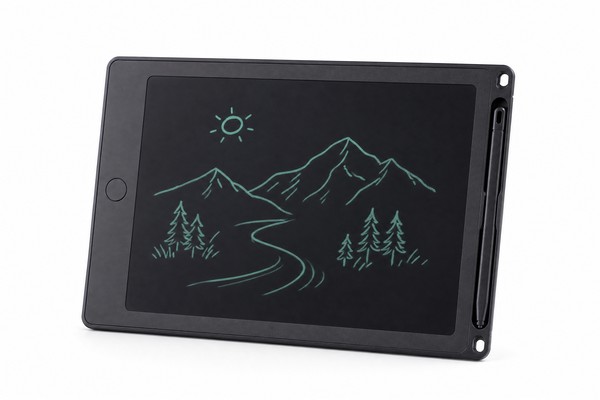
At a basic level, an LCD writing tablet uses a pressure-sensitive liquid crystal display layer that changes appearance when pressure is applied. For technical background on liquid crystals and LCD technology, see Wikipedia: Liquid-crystal display. Compared with backlit screens, many writing tablets use a low-power reflective LCD that does not emit light and therefore consumes very little energy.
Common components
- Sealed LCD or flexible polymer-dispersed liquid crystal sheet.
- Plastic housing (ABS or similar polymers).
- Small electronics for the erase function and a coin cell battery (CR2025 or CR2032 in many models).
- Stylus and sometimes a magnetic or pressure-sensitive surface.
Toxicity risks — what the research and standards say
Based on materials used in mainstream products, LCD writing tablets are not inherently toxic in normal, intended use. Liquid crystal materials are contained within sealed layers and are not volatile under typical conditions. Reputable manufacturers produce tablets that comply with chemical safety standards such as RoHS and REACH, which restrict hazardous substances in electronics.
However, there are a few safety considerations to be aware of:
1. Button (coin) battery hazards
The single greatest acute risk associated with small electronic tablets is the coin cell battery. If swallowed, these batteries can cause serious injury or death in children. Ensure battery compartments are secured with screws and keep spare batteries out of children’s reach. If you suspect a swallowed battery, seek emergency care immediately.
2. Small parts and choking
Styluses, detachable components, or loose casings can be choking hazards for young children. Supervision and age-appropriate labeling mitigate this risk.
3. Damaged panels and improper disposal
If an LCD panel is forcibly punctured or crushed, the internal materials may leak. While most consumer-grade LCDs contain non-volatile liquid crystals that pose low acute toxicity, they should still be treated as electronic waste. Recycle devices and batteries according to local regulations to avoid environmental contamination.
Eye health and screen exposure
Although LCD writing tablets typically have no backlight (reducing blue light emission), prolonged near-work can still cause digital eye strain.
For peer-reviewed guidance on symptoms and management of digital eye strain, see the NIH review on Digital Eye Strain and practical tips from the American Academy of Ophthalmology: Digital Devices and Your Eyes. Encourage regular breaks and proper viewing distance to reduce discomfort.
Quality, compliance, and choosing a safe product
Working with an established OEM/ODM manufacturer and wholesale partner helps ensure product safety. Quality manufacturers test for battery compartment security, use non-toxic plastics, and follow electronic waste disposal practices. If you are evaluating suppliers, consider asking about RoHS/REACH certification, product testing reports, and child-safety design features.
For practical purchasing tips that businesses often miss, see our guide: What is the most commonly overlooked feature when buying an LCD writing tablet?
Maintenance and troubleshooting (safety-focused)
Routine cleaning with a soft, dry cloth is recommended; avoid solvents that could damage the sealing. If the erase function fails, it is often due to battery or electronic issues rather than chemical problems.
For troubleshooting guidance, consult our articles: What should I do if the tablet still won’t erase after replacing the battery? and Why won’t my LCD writing tablet erase when I press the erase button?
Practical safety summary
- LCD writing tablets are not toxic in normal use when produced and handled correctly.
- Primary hazards: button batteries, small parts, and damage to panels.
- Follow manufacturer disposal and recycling guidance for electronic waste and batteries.
- Choose suppliers with safety certifications and robust quality control.
Contact us — wholesale and OEM/ODM inquiries
The U.S. Consumer Product Safety Commission (CPSC) provides guidelines on toy safety standards for children’s products.
If you’re sourcing LCD writing tablets for retail, education programs, or corporate use, our experienced OEM/ODM manufacturing team can help with compliant designs, custom branding, and bulk pricing. Contact our sales team for wholesale, OEM/ODM inquiries and product safety documentation to ensure the supplies you buy meet your regulatory and quality requirements.