Whether sample costs are refunded upon placing a bulk order is not a universal industry standard, but rather a commercial term negotiated between the buyer and the OEM/ODM manufacturer.
Global B2B contract frameworks, such as those discussed in WIPO guidance on commercial contracting , emphasize that financial terms, cost offsets, and sample crediting must be explicitly defined in written supply agreements before project kickoff.
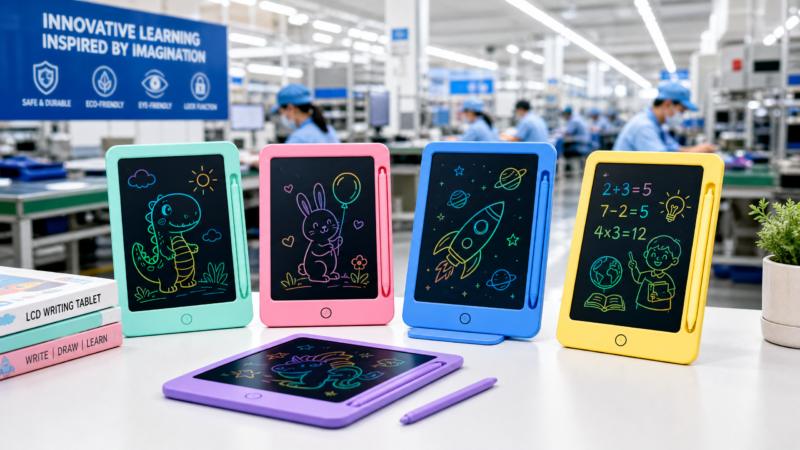
For brand owners, wholesalers, and procurement managers sourcing custom products from an LCD writing tablet product catalog , sample development involves dedicated engineering setup, custom tooling adjustments, and prototyping overhead.
Consequently, refund policies depend entirely on agreed purchase order thresholds, order volume, and customization complexity rather than automatic industry assumptions or unverified market promises.
Understanding B2B Sample Cost Policies and Refund Mechanisms
Sample fees in contract manufacturing generally cover prototyping labor, customized tooling setup, and specialized material sourcing. Manufacturers rarely absorb these upfront expenses without a formalized commitment to bulk manufacturing.
Importers should evaluate whether sample charges can be credited back against future mass production orders, typically structured as a direct deduction from the final commercial invoice once specific order volume thresholds are achieved.
Clarity in initial purchase negotiations ensures that both parties understand whether sample fees represent an independent engineering service or an advance deposit toward upcoming production runs.
In international trade practice, establishing clear financial protocols prevents misunderstandings regarding prototype expenses. When buyers request specialized modifications, such as custom molds, unique colorways, or proprietary packaging, engineering overhead increases significantly.
Manufacturers calculate sample fees based on these direct resource allocations.
Linking sample cost refunds to formal bulk order milestones creates a balanced commercial framework that aligns the interests of both the manufacturing partner and the purchasing organization, ensuring mutual accountability, financial transparency, and smooth operational execution throughout the entire development lifecycle and subsequent mass manufacturing
phases.
Key Factors Influencing Sample Fee Crediting
Several commercial and technical variables dictate whether sample costs are eligible for refund or credit upon placing a bulk order.
Standard catalog items often feature straightforward sample crediting policies due to minimal retooling overhead, whereas highly customized educational toys or specialized tablet housings require extensive engineering validation.
The table below outlines key evaluation factors and their typical contractual implications for B2B buyers navigating custom procurement across international supply chains and diverse regulatory compliance environments.
| Evaluation Factor | Sample Cost Treatment | Bulk Order Implication | Contractual Best Practice |
|---|---|---|---|
| Standard Catalog Models | Nominal fee or creditable | Low MOQ threshold for credit offset | Define clear credit clauses in the PO |
| Custom Tooling & Molds | Non-refundable engineering fee | Establishes exclusive mold ownership | Specify mold amortization terms upfront |
| Custom Branding & Packaging | Plate setup and sampling fee | Reusable artwork files for mass production | Confirm digital artwork sign-off first |
| Regulatory Compliance Testing | Third-party laboratory testing cost | Independent of unit manufacturing price | Agree on target market standards early |
Pre-Production Samples (PPS) and Quality Sign-Off Protocols
Transitioning from initial samples to mass production requires rigorous quality control protocols, including Pre-Production Samples (PPS), golden samples, and batch consistency checks.
Professional procurement practices rely on written approval, controlled technical specifications, color and material sign-offs, packaging samples, and key functional inspections. Buyers must review physical prototypes thoroughly, maintain documented approval records, and establish strict change control procedures.
Manufacturers execute production strictly against approved reference samples to ensure complete consistency across all manufactured units and commercial production batches.
Maintaining rigorous documentation during the PPS phase prevents discrepancies between approved prototypes and final commercial shipments. Every parameter, from screen sensitivity and battery housing fit to outer carton labeling, is recorded in the master production specification file.
Any engineering change requested after PPS approval requires formal written sign-off from both participating entities to maintain product integrity and prevent unexpected disruptions in manufacturing delivery timelines and supply chain logistics planning.
Information Required for Formal Quotation and Evaluation
To receive accurate determinations regarding sample fees, refund eligibility, sample lead times, and production schedules, buyers must provide comprehensive project parameters. Manufacturers evaluate each case individually based on product configuration, customization scope, packaging requirements, testing standards, and destination market regulations.
Providing detailed specifications allows suppliers to issue formal, binding quotations rather than generalized estimates. Importers should prepare thorough documentation covering technical drawings, forecasted annual volumes, target delivery windows, and quality parameters before requesting formal commercial evaluation and formal supply agreements.
Initiate Your OEM/ODM Project Evaluation Today
Navigating sample cost refunds and contract terms requires clear communication between international brands and manufacturing partners. To obtain an actionable sample assessment, formal quotation, and production evaluation tailored to your specific project, please contact our OEM/ODM team .
Ensure you submit your target order quantity, destination market, complete product specifications, logo and packaging artwork files, desired sample testing standards, and projected project timeline for prompt professional review, transparent cost structuring, and structured commercial planning.
Explore the LCD writing tablet product catalog to compare relevant product configurations for this sourcing decision.
For independent background guidance, buyers can consult ISO quality-management guidance and confirm the requirements that apply to their exact product and market.