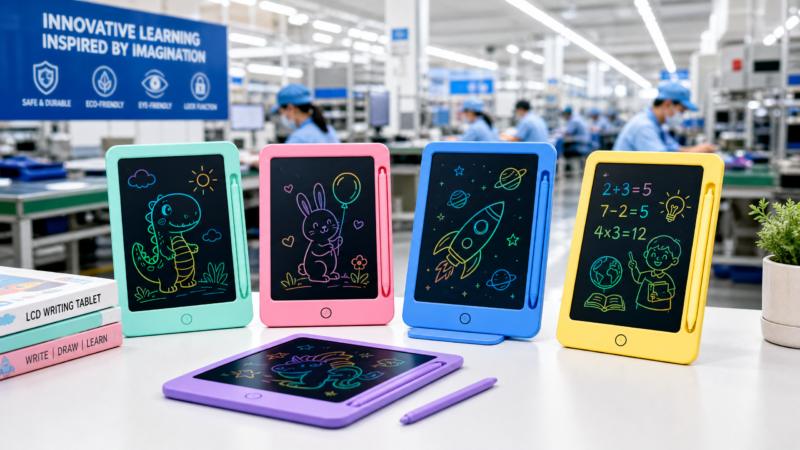
The total cost of a custom mold for a new LCD writing tablet design depends on multiple engineering and production variables, including shell structural complexity, cavity configuration, surface finish requirements, and prototyping stages.
Because every brand buyer has unique functional specifications, tooling investments cannot be generalized into a single fixed price.
Establishing a custom mold requires rigorous precision engineering to ensure structural integrity, reliable electronics integration, and consistent mass production quality across large manufacturing batches destined for modern global retail channels, commercial distribution networks, and long-term brand expansion objectives.
Core Cost Factors in Custom LCD Tablet Tooling
When brand owners embark on developing a proprietary LCD writing tablet, several technical elements dictate the overall tooling budget. The primary driver is the physical geometry of the plastic enclosure.
Intricate outer casings with ergonomic grips, custom battery door placements, or specialized stylus docking mechanisms demand multi-slider injection molds, which increase tooling fabrication time, machining complexity, and engineering overhead.
Surface finishing also plays a critical role in mold pricing. High-gloss finishes, textured matte surfaces, or dual-injection rubberized edges require specialized mold texturing and electrical discharge machining processes.
Furthermore, single-cavity prototype molds differ significantly from multi-cavity production molds designed for high-volume manufacturing. Understanding these engineering choices allows procurement teams to balance initial tooling expenditures against anticipated unit costs over the product lifecycle and future purchase orders.
Engineering Complexity and Material Selection
Material selection further impacts mold durability and thermal contraction rates during injection. High-grade engineering polymers such as acrylonitrile butadiene styrene or polycarbonate blends require precise thermal control within the mold base.
Choosing appropriate steel alloys for the mold core ensures extended tool life for large production runs, directly influencing long-term unit economics and reducing the frequency of costly maintenance or mold replacement cycles.
Component integration also affects overall tooling complexity. Incorporating multi-color casing components, transparent protective covers, or internal structural ribs requires careful gating design and flow analysis to prevent warping.
Engineering teams must conduct mold flow simulations prior to steel cutting to identify potential filling defects, weld lines, or sink marks, ensuring optimal structural performance across every manufactured unit.
Prototyping, Validation, and Tooling Ownership
Before committing to full-scale steel mold fabrication, rigorous prototyping and design validation are essential to mitigate manufacturing risks. Rapid prototyping methods, such as stereolithography or high-precision CNC machining, allow engineering teams to verify ergonomics, screen fitment, button response, and drop-test performance before cutting expensive steel.
Once tooling is finalized, clear contractual agreements regarding mold ownership, maintenance responsibilities, and intellectual property protection are vital for secure international trade.
Brand partners can reference international frameworks such as WIPO guidance on commercial contracting to structure transparent agreements that safeguard proprietary designs, clarify asset custody, and prevent unauthorized reproduction in global export markets.
Legal clarity during contract negotiation ensures that mold custody remains properly defined, protecting the brand’s proprietary intellectual property while establishing clear protocols for routine tool maintenance, storage, and eventual replacement at the end of the tooling lifespan.
Comparative Analysis of Tooling Investment vs. Production Scale
Evaluating tooling options requires a strategic comparison of initial capital expenditure, lead times, and manufacturing scalability. The table below outlines standard tooling classifications and their operational implications for brand buyers seeking customized consumer electronics.
| Tooling Type | Primary Purpose | Estimated Lead Time | Production Suitability |
|---|---|---|---|
| Soft Tooling (Aluminum) | Initial functional prototyping and testing | 2 to 3 weeks | Low-volume sample runs and market validation |
| Single-Cavity Steel Mold | Pilot production and moderate batches | 3 to 5 weeks | Test marketing and regional retail launches |
| Multi-Cavity Production Mold | High-volume commercial manufacturing | 5 to 8 weeks | Global distribution and large-scale wholesale |
| Family Mold Configurations | Producing multiple matching components | 6 to 9 weeks | Integrated toy and tablet accessory sets |
Navigating Your OEM Partnership and Catalog Review
Collaborating with an experienced manufacturing partner streamlines the transition from concept sketches to production-ready tooling. Reviewing existing product platforms in our LCD writing tablet product catalog can help identify pre-certified chassis designs, reducing custom engineering overhead and accelerating time-to-market.
Compliance standards and regulatory testing requirements must always be verified against target market regulations, ensuring seamless customs clearance and retail distribution across North American and European jurisdictions without unexpected trade barriers or compliance delays.
LCD Writing Tablet Buyer Checklist: The Cost Of A Custom Mold For A New LCD Tablet Design
Requesting a Customized Project Evaluation
To receive an accurate and actionable tooling assessment for your proprietary LCD writing tablet project, brand owners and wholesale buyers are invited to contact our OEM/ODM team. When submitting your inquiry, please provide your expected order quantity, target export market, complete brand artwork files, specific packaging requirements, and anticipated project timeline.
Our engineering specialists will review your specifications to deliver a comprehensive feasibility and development roadmap tailored to your strategic commercial goals, ensuring full transparency throughout the manufacturing lifecycle and establishing a solid foundation for partnership.
For independent background guidance, buyers can consult ISO quality-management guidance and confirm the requirements that apply to their exact product and market.