This buyer guide is written for importers, distributors, education suppliers, toy retailers, children’s brands, e-commerce sellers, and private-label buyers. It focuses on the real product format and the decisions that affect a successful wholesale project.
Buyers should compare the user, size, shape, color, battery, accessories, package, carton quantity, artwork, destination market, and sample process. Product specifications are based on the relevant product page and should be confirmed in the formal quotation.
Review the Duck and Panda Talking Reading Machine product page and the Product catalog before preparing an RFQ.
What makes this talking reading machine different?
The duck and panda format combines a friendly character design with picture recognition, point reading, pinyin, voice guidance, picture-book and textbook content, and audio-assisted early learning. It is a compact screen-free learning device rather than a conventional LCD writing tablet. This gives buyers a clear position in preschool learning, language education, children’s gifts, and character-themed retail.
A careful purchasing brief should convert this application into requirements for the user, channel, quantity, artwork, package, destination, and sample approval. This keeps the product listing, quotation, artwork, and production aligned.
Who is the product designed for?
The supplied information recommends children aged 4–7. Parents can use it for pinyin, picture recognition, pronunciation, stories, and guided learning. Preschools and education suppliers can evaluate it for picture books, textbooks, and early language programs. Retailers can select duck, panda, or a mixed character assortment. The final age guidance and content library should be confirmed for the destination market.
A careful purchasing brief should convert this application into requirements for the user, channel, quantity, artwork, package, destination, and sample approval. This keeps the product listing, quotation, artwork, and production aligned.
How should cards and stickers be evaluated?
The supplied configuration lists 56 3D recognition cards and 8 point-reading stickers. Buyers should test every recognition point, card image, pinyin item, pronunciation, story file, and sticker location. The sample should be tested with the intended books or cards, not only with a product photograph. A content checklist can record card number, language, audio, recognition response, and artwork approval.
A careful purchasing brief should convert this application into requirements for the user, channel, quantity, artwork, package, destination, and sample approval. This keeps the product listing, quotation, artwork, and production aligned.
What content can be customized?
Buyers can discuss card artwork, point-reading stickers, picture-book content, textbook content, pinyin, pronunciation, stories, sound effects, instruction language, and package presentation. The final scope depends on the approved content library, audio files, order quantity, and market. Custom audio should be reviewed by the buyer before mass production.
A careful purchasing brief should convert this application into requirements for the user, channel, quantity, artwork, package, destination, and sample approval. This keeps the product listing, quotation, artwork, and production aligned.
What hardware details matter in an RFQ?
The product is listed at 41 × 60 × 58 mm and 61 g, with a 280mAh rechargeable lithium battery, Micro USB charging interface, 5V / 1A input, approximately four hours of operating time, and a 0.5W speaker. Buyers should confirm the test conditions for operating time and the final interface, battery, cable, and package before using these details in a sales listing.
A careful purchasing brief should convert this application into requirements for the user, channel, quantity, artwork, package, destination, and sample approval. This keeps the product listing, quotation, artwork, and production aligned.
How can duck and panda versions be sold?
A retailer may sell duck and panda as separate character options, a mixed assortment, or a themed learning collection. Confirm the color and character ratio, barcode, retail box, carton label, and product photography. If one character is intended for a particular market, confirm the quantity and packaging before production.
A careful purchasing brief should convert this application into requirements for the user, channel, quantity, artwork, package, destination, and sample approval. This keeps the product listing, quotation, artwork, and production aligned.
What should a private-label buyer check?
Check the shell artwork, logo, buttons, speaker, charging interface, battery, cards, stickers, audio, books, instruction sheet, retail box, barcode, and carton marks. The product page and package should use the same content name. Compliance documents must be verified for the exact configuration, battery, production batch, and destination market.
A careful purchasing brief should convert this application into requirements for the user, channel, quantity, artwork, package, destination, and sample approval. This keeps the product listing, quotation, artwork, and production aligned.
How does this product compare with a talking pen?
A talking reading machine uses a character-shaped device and card or sticker interaction. A talking pen normally relies on a pen form and coded books or cards. The correct choice depends on the buyer’s content library, age group, package, and channel. Buyers can compare both formats through the product catalog and request a sample for the intended learning workflow.
A careful purchasing brief should convert this application into requirements for the user, channel, quantity, artwork, package, destination, and sample approval. This keeps the product listing, quotation, artwork, and production aligned.
Duck and Panda Talking Reading Machine specifications
| Item | Provided specification |
|---|---|
| Recommended age | 4–7 years |
| Product size | 41 × 60 × 58 mm |
| Product weight | 61 g |
| Battery | Rechargeable lithium battery, 280mAh |
| Charging interface | Micro USB |
| Input power | 5V / 1A |
| Operating time | Approximately 4 hours; confirm test conditions |
| Speaker power | 0.5W |
| Cards and stickers | 56 3D recognition cards + 8 point-reading stickers |
| Color box | 218 × 123 × 42 mm |
| Outer carton | 455 × 450 × 270 mm |
| Carton quantity | 40 pieces per carton |
| Carton weight | 18 kg as shown in supplied specification |
The table reflects the supplied product information. Confirm the final configuration, document set, and packed shipment in the approved quotation and sample.
How should buyers plan a product launch?
A product launch should begin with the target user and sales channel. A preschool retailer may need a simple learning story and clear age guidance. An education supplier may need language content, cards, books, stickers, or classroom packaging. A gift retailer may focus on the character shape, color, and package. A distributor needs carton quantity, weight, dimensions, documents, and repeat-order planning. These needs should be written into the product brief before a sample is approved.
The online listing should match the approved product. The title, model, size, color, battery, accessories, package, and product image must describe the same selling unit. If the buyer changes the shell, content, color, package, or accessory, the listing and artwork should be reviewed again. Consistent information protects customer trust and reduces returns.
What should buyers confirm before packaging?
Confirm the product name, model if applicable, dimensions, weight, battery, charging or power information, accessories, printed content, language, barcode, instructions, and destination-market documents. For an audio or reading machine, test the recognition workflow and audio content with the intended cards or books. For an LCD writing tablet, check the writing surface, erase function, stylus, frame, and color.
Artwork should be proofread at real product scale. Character names, letters, pinyin, instructions, warnings, and package claims should be reviewed by the buyer. The final package should not promise a function that is not confirmed in the approved sample. A complete approval set includes the product, retail box, instruction sheet, barcode, carton label, and quotation.
How should shipping and repeat orders be managed?
Use the product and carton information for preliminary freight planning, then confirm the final packed dimensions and gross weight after customization. Color mixes, inserts, books, cards, stickers, retail boxes, and accessories can change the carton. The purchase order should identify the unit quantity, color or character ratio, carton marks, destination, and delivery terms.
For repeat orders, keep the approved sample and artwork in one project file. Compare the new batch with the reference before shipment. This is important for children’s products because a small change in color, content, sound, printed language, or accessory can affect the retail listing. Good records also make replenishment and distributor support easier.
What should a complete RFQ include?
A complete RFQ states the exact product, target market, quantity, preferred colors or character styles, language, logo, packaging, content, documents, destination, inspection, and requested schedule. Buyers should explain whether the product is for education, retail, gifts, e-commerce, promotional use, or private label. A clear brief helps the supplier confirm feasibility, sample requirements, and the final quotation.
How should a distributor choose between character styles?
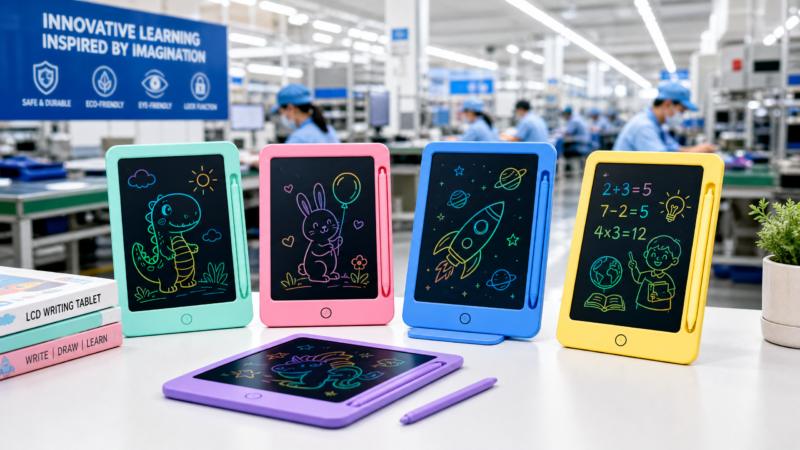
Character design affects the customer’s first impression, but it should be considered together with size, function, content, color, and package. A duck or panda reading machine may fit a language-learning collection. A dinosaur or rocket writing tablet may fit a drawing, gift, or creative-learning collection. A general animal tablet may suit a broad children’s assortment. Buyers should define the main sales channel before selecting the character so that the product story, package, and content match.
For online retail, the product image should show the actual body, stylus or cards, and available colors. For a physical store, the retail box should explain the main use in short language. For an education supplier, the buyer may need a specification sheet and sample content. For a private-label brand, the character should connect with the wider product collection. The same product can serve different channels, but the sales message must stay accurate.
What should buyers check in a pre-production sample?
Check the shape, dimensions, weight, surface, buttons, erase function, stylus, battery, charging interface, speaker, cards, stickers, printed artwork, or other accessories that apply to the selected product. Compare the sample with the specification table and quotation. If the product is an audio learning machine, test the complete audio workflow. If it is an LCD writing tablet, test writing, erasing, stylus handling, and battery replacement.
Also check the retail package. Confirm the product name, model, color, language, barcode, instruction sheet, warning information if applicable, and carton label. The sample should represent the complete selling unit. Keeping a reference sample helps the buyer inspect future orders and resolve questions about color, artwork, content, or accessories.
How should OEM artwork and content be approved?
A useful approval process starts with a written brief. The brief should identify the target age, market, language, character, color, logo, package, content, and quantity. The buyer should provide artwork in an agreed format and review a product-scale proof. For reading machines, audio files and recognition points must be tested with the physical cards or stickers. For writing tablets, printed learning artwork should be checked for layout, language, and visibility.
Do not approve packaging only from a digital mockup when the product shape is unusual. The character body, stylus position, button location, and retail box may change the visual balance. The buyer should approve the real sample, package, and instructions as a single project. Any later change to the shell, color, content, battery, or accessory should be recorded and reviewed.
How can buyers plan wholesale inventory?
Carton quantity, outer-carton size, gross weight, and color or character ratio affect inventory planning. A 40-piece carton of a talking reading machine has a different storage and freight profile from a 100-piece carton of a compact writing tablet. A 60- or 70-piece carton may suit a themed retail launch. Use the supplied figures for preliminary planning, then confirm the final packed shipment after the package is approved.
Buyers should decide whether to launch one hero character or a mixed assortment. One character simplifies photography and inventory. A mixed assortment can make a retail display more attractive but requires clear carton ratios, barcodes, and receiving instructions. The purchase order should state the expected unit quantity, color or character ratio, carton marks, destination, and delivery terms.
How should the product page answer buyer questions?
A strong product page answers the questions a buyer asks before sending an RFQ. It explains what the product is, who uses it, what is included, what size it is, which colors or styles are available, how it is powered, how it is packed, and what can be customized. It also separates confirmed catalogue information from options that require a sample or quotation.
This structure helps human procurement teams compare products and helps search systems understand the page. A clear answer-first paragraph, specification table, application sections, buyer checklist, FAQ, and internal link to the product page create a useful path from search to inquiry. Claims about certificates, operating time, learning content, or customization should remain tied to the confirmed configuration.
What should be considered for repeat orders?
Keep the approved sample, artwork, package file, audio or learning content, specification table, quotation, and inspection notes together. Before a repeat order, compare the new product with the reference. Confirm whether the same battery, accessory set, color, character, cards, stickers, audio, or package is required. If the buyer changes one of these items, update the product listing and request a new approval.
Repeat-order records are especially important for children’s products. Retailers may use one product image for months, while a small design change can create customer questions. Consistent records support online listings, distributor catalogs, receiving inspection, and customer service.
Buyer checklist
- Confirm the exact product, size, theme, color, and intended user.
- Confirm the battery, writing or reading function, accessories, and content.
- Choose logo, package, instruction language, barcode, and carton marks.
- Request the exact document set for the destination market.
- Approve the complete product and pre-production sample.
- Confirm quantity, carton plan, lead time, shipping, and inspection.
Frequently asked questions
How many cards are included in the standard configuration?
Confirm this point in the product specification, quotation, and approved sample. Final availability depends on the selected configuration, quantity, market, and customization requirements.
Does the talking reading machine use a rechargeable battery?
Confirm this point in the product specification, quotation, and approved sample. Final availability depends on the selected configuration, quantity, market, and customization requirements.
Can the duck or panda content and packaging be customized?
Confirm this point in the product specification, quotation, and approved sample. Final availability depends on the selected configuration, quantity, market, and customization requirements.
Request a quote for Duck and Panda Talking Reading Machine
Send your target market, quantity, style or color plan, content, logo, packaging, delivery destination, and sample requirements.
Product specifications and document availability should be confirmed in the formal quotation and approved pre-production sample.