I have watched toy brands launch with excitement. Then they vanish. Amazon changes a rule. A certification expires. The brand is gone. Does this sound familiar?
Most toy brands on Amazon fail because they are built on shortcuts. They skip real certifications. They use unreliable factories. When Amazon tightens its rules, there is nothing left to hold the brand together. The fix is simpler than you think.
I want to show you exactly what separates the brands that last from the ones that disappear. I have spent years working with LCD writing tablet factories. I have seen what works and what falls apart. Keep reading. What I share next could save your brand.
Why do most private label toy brands disappear within two years?
You built a brand. Then Amazon updated its toy safety rules. Your supplier could not keep up. Now your listings are down. This happens more than you know.
Most toy brands disappear because they were never built on solid ground. They relied on cheap suppliers with no real documentation. When Amazon asked for proof of compliance, they had nothing. No certifications. No test reports. No way forward.
I remember talking to a seller in 2022. He had a children’s drawing tablet brand. It was doing well. He was selling over three hundred units a month. Then Amazon sent a compliance notice. They needed ASTM F963 test reports. He called his supplier. The supplier went quiet for two weeks. Then they sent a fake-looking document. Amazon rejected it. His listing was suspended. He lost everything he had built in eighteen months.
That story stuck with me. He was not lazy. He was just not informed. He did not know that the foundation of a lasting toy brand is documentation you can actually defend.
Common Reasons Toy Brands Fail on Amazon
| Failure Reason | What It Looks Like | How Common Is It | Can It Be Fixed |
|---|---|---|---|
| No safety certifications | Listing suspended after audit | Very common | Yes, but costly late |
| Weak supplier relationship | Supplier stops responding | Common | Hard to fix quickly |
| Generic unbranded product | Easily copied by competitors | Extremely common | Requires repositioning |
| No children’s product testing | Fails CPSC or ASTM checks | Common | Yes, with right factory |
| Over-reliance on one SKU | One policy change kills brand | Moderate | Yes, with planning |
What does a policy-proof product actually look like?
You hear “policy-proof” and think it sounds impossible. Amazon keeps changing things. How can any product be safe? I felt the same way once.
A policy-proof product has real third-party test reports. It has clear age-grading labels. It meets ASTM F963 and CPSC standards. The packaging is honest. The materials are verified. When Amazon asks for proof, you send it the same day. That is what protection looks like.
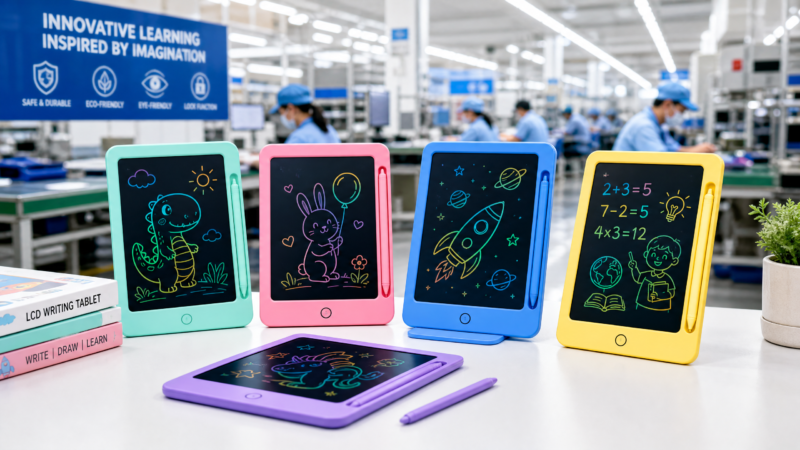
I work closely with an LCD writing tablet factory in Guangdong. They produce tablets for kids aged three and up. When I first visited, I was surprised. They had a full documentation room. Binders of test reports from SGS and Intertek. Every product had a children’s product certificate. They ran routine material checks on their plastics and styluses.
One of their long-term brand partners had been selling on Amazon for five years. In that time, Amazon changed its toy category requirements three times. Each time, the brand just uploaded updated documents. No suspensions. No panicked emails to the factory. They were ready because their factory made them ready. I walked away from that visit understanding something important. The brands still standing after five years had not found a magic strategy. They had found a real factory.
What a Policy-Ready LCD Writing Tablet Includes
| Product Element | Why It Matters | Who Verifies It |
|---|---|---|
| ASTM F963 test report | Required for US toy market | Third-party lab like SGS |
| Children’s Product Certificate | Mandatory for Amazon listings | Manufacturer with lab support |
| Age-grading label | Reduces liability and returns | Manufacturer and brand owner |
| Non-toxic material report | Protects against chemical claims | Accredited testing lab |
| Choking hazard warnings | Required for small parts near children | Brand owner with legal guidance |
How does your factory relationship protect you when rules change?
Amazon updates its policies. You panic. You email your supplier. No reply for three days. You realize you are on your own. This is the worst place to be.
Your factory relationship is your first line of defence. A good factory tracks regulatory changes. They update test reports proactively. They tell you what is coming before Amazon does. When you have that kind of partner, policy changes become manageable problems, not brand-ending crises.
I visited a factory last year that supplied LCD writing tablets to a mid-sized toy brand. The brand owner told me a story. In early 2023, Amazon started requiring more detailed compliance documentation for children’s electronics. He found out on a Tuesday. By Thursday, his factory had already prepared updated certificates. They had been monitoring the CPSC bulletin board for months. They knew the change was coming.
He told me he used to work with a different factory. When rules changed back in 2021, that factory simply disappeared. Stopped answering emails. He lost three months of sales. He switched factories. He never looked back. His current factory has a dedicated compliance contact. That one person has saved his brand twice already. I keep telling people this story. The difference between a brand that survives and one that collapses is rarely the product itself. It is almost always the relationship behind it.
Factory Partnership Features That Protect Your Brand
| Factory Feature | How It Helps You | What to Ask For | Red Flag If Missing |
|---|---|---|---|
| Compliance team on staff | Tracks regulatory changes for you | Ask for their compliance contact | Yes |
| Existing test reports on file | Ready to send when Amazon asks | Request sample documentation | Yes |
| Experience with US market | Understands CPSC and ASTM rules | Ask for US brand references | Yes |
| Willingness to co-develop | Lets you build a unique product | Discuss MOQ for custom tooling | Moderate |
Conclusion
I have seen brands rise and fall. The ones still standing found real factories and earned real certifications. Build that foundation first. Everything else follows.