You have an old LCD writing tablet sitting in a drawer. You do not know what to do with it. Throwing it in the bin feels wrong.
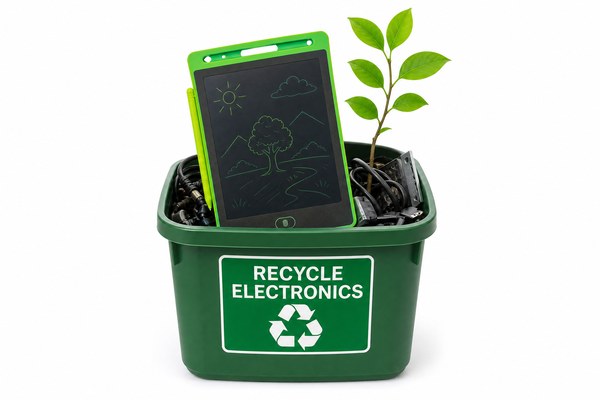
You should never toss an LCD writing tablet in regular trash. These devices contain small electronic parts and batteries. The right steps are: check the battery type, find an e-waste drop-off, or explore reuse options. This keeps harmful materials out of landfills and protects the environment.
I have seen so many people make this mistake. They buy a new tablet and just bin the old one. But LCD writing tablets are electronic devices. They have circuit boards, LCD panels, and often a small coin-cell or lithium battery inside. All of these need special handling. I want to walk you through every safe and responsible option. By the end, you will know exactly what to do. And you will feel good about doing it the right way.
1. Understand What Is Inside Your LCD Writing Tablet
Most people do not know what their tablet is made of. That lack of knowledge leads to bad disposal choices. And bad choices can cause real environmental damage.
An LCD writing tablet contains an LCD panel, a plastic shell, a small PCB, and a battery. Some models use coin-cell batteries. Others use thin lithium cells. Each of these materials needs to be separated and handled correctly before disposal.
I work closely with the team at our Shenzhen factory every day. I have seen exactly how these tablets are built from the inside out. At GY-industries, our LCD writing tablets are designed with CE, RoHS, and CPC certifications. RoHS certification means our products already limit harmful substances like lead and mercury. But even a RoHS-compliant device still needs proper end-of-life handling. The battery alone can be a fire risk if punctured in a landfill. Knowing what is inside helps you take the right next step. It also helps recyclers process the device safely and efficiently.
What Each Component Needs at End of Life
| Component | Material Type | Disposal Method | Risk If Ignored |
|---|---|---|---|
| LCD Panel | Glass, liquid crystal layer | E-waste facility | Chemical leakage into soil |
| Coin-cell or lithium battery | Lithium, manganese | Battery recycling point | Fire risk, toxic leakage |
| PCB (circuit board) | Copper, fiberglass, solder | E-waste facility | Heavy metal soil contamination |
| Plastic shell | ABS plastic | Hard plastic recycling | Long-term landfill waste |
2. Find the Right Place to Recycle or Drop Off Your Device
You know what is inside now. But where do you actually take it? Many people get stuck right here. The good news is there are more options than you think.
You can recycle an old LCD writing tablet at local e-waste collection events, retailer take-back programs, or certified e-waste recyclers. In the US, you can search for a drop-off point using the EPA’s electronics recycling guide. Many countries have similar programs.
I remember talking to one of our OEM clients in Europe. They were launching a new line of GY-industries LCD writing tablets for kids. They asked me what they should tell their customers about disposal. I pointed them straight to the retailer take-back option. Many big-box electronics stores now accept small e-waste for free. You walk in, hand over the device, and they handle the rest. Our client added this information right to their product packaging. It is a simple step. But it makes a huge difference. Customers appreciate brands that think ahead about the full product lifecycle.
Recycling Options by Location Type
| Option | Where to Find It | Cost | Best For |
|---|---|---|---|
| Retailer take-back program | Electronics stores (Best Buy, Staples, etc.) | Usually free | Single device drop-off |
| Municipal e-waste event | Local government website | Free | Disposing of multiple devices |
| Certified e-waste recycler | Search R2 or e-Stewards certified facilities | Free to small fee | Responsible certified recycling |
| Mail-in recycling program | TerraCycle or brand websites | Sometimes free | Remote areas with no local options |
3. Consider Reuse, Donation, or Resale Before Recycling
Recycling is great. But reuse is even better. Many old LCD writing tablets still work perfectly well. Someone else might love yours.
Before recycling, ask yourself if the tablet still works. If it does, consider donating it to a school, a community center, or a child in your family. You can also resell it online. Reuse keeps the device in circulation longer and reduces the need to manufacture new ones.
I have seen this work beautifully with our GY-industries products. Our LCD writing tablets are built tough at our Shenzhen factory. They are designed for durability. Many of our OEM and ODM clients tell me their customers use the same tablet for four or five years. After the original owner is done, the tablet often has plenty of life left. I personally gave an old one to my nephew. He was five years old. He used it every single day for drawing and practicing letters. It lasted another two years for him. That is two years of a new tablet not being manufactured. Small choices like this add up to a big impact over time.
Reuse Options by Condition
| Tablet Condition | Best Reuse Option | Who Benefits | How to Do It |
|---|---|---|---|
| Works perfectly | Resell or gift | New user, you save money | Post on eBay, Facebook Marketplace |
| Works but looks worn | Donate to school or shelter | Children, community groups | Contact local schools or charities |
| Works partially | Repurpose as a memo board | Office, kitchen use | Use it for short daily notes |
| Does not work at all | Recycle at e-waste facility | Environment | Use options from Section 2 above |
Conclusion
Disposing of an LCD writing tablet responsibly is simple. Reuse it, donate it, or recycle it properly. Never bin it. If you have questions about our products or after-sales service, or want to build a sustainable product line with us, contact GY-industries today.