You reach for a whiteboard marker. The smell hits you right away. Your eyes water. You wonder if this is really okay to use every day.
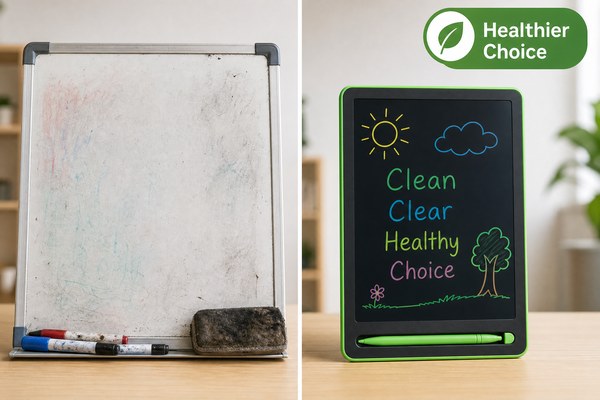
An LCD writing tablet is healthier than a whiteboard marker for most people. It produces zero fumes, zero dust, and zero chemical exposure. There is nothing to inhale and nothing to wipe off with chemical-soaked erasers. For kids and office workers especially, this difference matters a lot.
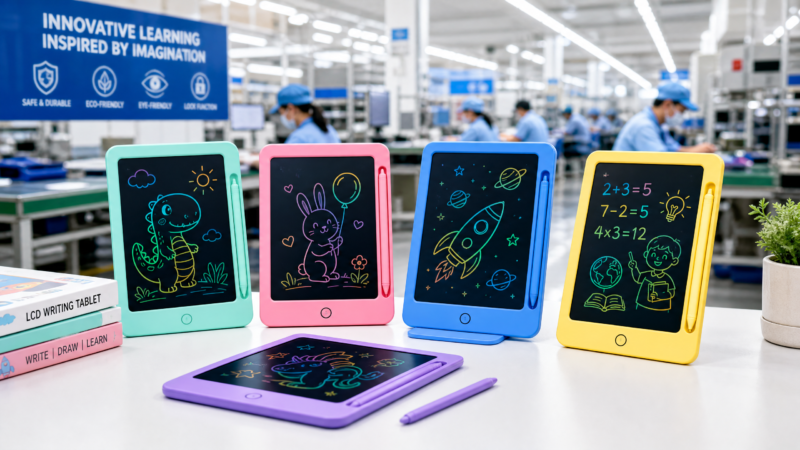
I have spent years working closely with LCD writing tablet production at our Shenzhen factory. I have seen how these simple devices quietly remove a whole list of health risks from classrooms and offices. Many people never stop to think about what whiteboard markers actually put into the air. Once you understand the comparison, it is hard to ignore. Let me walk you through three big health areas where LCD tablets clearly come out ahead. You might be surprised by how much a small switch can change your daily environment.
1. Chemical Fumes: Whiteboard Markers Release More Than You Think
You use whiteboard markers every day. You barely notice the smell anymore. But your body still notices it every single time.
Whiteboard markers contain solvents like butanol and isopropanol. These solvents release fumes into the air as you write. Breathing them in regularly can cause headaches, dizziness, and irritation. An LCD writing tablet releases absolutely no fumes at all. There is nothing inside to evaporate or off-gas.
I remember visiting a primary school that used our GY-industries LCD writing tablets in their classrooms. The teacher told me something that stuck with me. She said her headaches almost completely stopped after they switched. She had been using whiteboard markers for six years. She never connected the two things until the markers were gone. I have heard similar stories from office managers too. One told me his team stopped complaining about stuffy air after replacing their whiteboard with LCD tablets. It sounds small. But when you spend six or eight hours a day in a room, air quality shapes how you feel and how well you think. According to the U.S. Environmental Protection Agency, volatile organic compounds from everyday products are a major source of indoor air pollution. Whiteboard markers are one quiet contributor to that problem. LCD tablets remove that source entirely.
Fume and Chemical Comparison: LCD Tablet vs. Whiteboard Marker
| Factor | Whiteboard Marker | LCD Writing Tablet | Health Impact |
|---|---|---|---|
| Chemical solvents | Yes (butanol, isopropanol) | None | Markers can cause headaches and eye irritation |
| Airborne fumes | Released during use | Zero fumes | Fumes affect air quality in enclosed rooms |
| Smell sensitivity | Strong and persistent | Odourless | Important for asthma and allergy sufferers |
| Long-term exposure risk | Moderate with daily use | None | LCD tablets eliminate this risk completely |
2. Skin and Eye Contact: Small Exposures Add Up Over Time
You get marker ink on your fingers. You rub your eye without thinking. It seems harmless. But this happens dozens of times a week.
Whiteboard marker ink can irritate skin and eyes on repeated contact. The cleaning sprays used to wipe boards add another layer of chemical exposure. LCD writing tablets require no ink, no spray, and no physical cleaning chemicals. One press of a button erases everything instantly and safely.
I have a colleague who used to run training workshops every week. She wrote on whiteboards for hours at a time. Over months, she developed dry, cracked skin on her writing hand. Her doctor eventually linked it to repeated contact with marker ink and cleaning fluid. When her company switched to LCD writing tablets for their trainers, the problem slowly went away. I thought about her story when we were developing new OEM products at our GY-industries Shenzhen factory. It reminded me that health benefits are not always dramatic. Sometimes they are quiet and gradual. The small irritations just stop. That matters for teachers, trainers, and anyone who writes on boards for a living. Our LCD tablets carry CE and RoHS certifications, which means the materials inside have been tested and confirmed safe. That kind of assurance is simply not available with a marker pen.
Skin and Eye Safety Comparison
| Exposure Type | Whiteboard Marker | LCD Writing Tablet | Risk Level |
|---|---|---|---|
| Ink on skin | Common during use | No ink involved | Low to moderate for markers |
| Cleaning spray contact | Required regularly | Not needed | Chemical cleaners add extra exposure |
| Eye irritation risk | Present if touched | None | Zero risk with LCD tablets |
| Safety certifications | Not typically certified | CE, RoHS, CPC certified | LCD tablets offer verified material safety |
3. Children’s Health: The Stakes Are Higher for Young Users
Children put things near their faces. They touch everything. They are far more sensitive to chemicals than adults are. This is where the health gap really opens up.
Children’s bodies absorb chemical compounds faster and more deeply than adult bodies. Whiteboard markers in classrooms expose kids to fumes and ink daily. LCD writing tablets certified to CPC standards are specifically tested for child safety. They are a much smarter choice for any child’s learning environment.
I think about this one a lot. We produce a wide range of LCD writing tablets at GY-industries, including smaller sizes designed especially for children. Parents order them for home learning. Schools order them in bulk through our OEM and ODM programmes. The most common feedback I hear from parents is relief. Relief that their child is not chewing on a marker cap. Relief that there are no stains, no fumes, no mess. One parent told me her daughter had been using our tablet every evening for homework for over a year. The child loved it. She called it her “magic drawing board.” But beyond the fun, there was a real health benefit happening quietly in the background. No chemical exposure. No accidental ingestion risk. Our CPC certification specifically covers children’s products and confirms our tablets meet strict safety standards for young users. That is not something a pack of whiteboard markers can offer.
Child Safety Comparison: Markers vs. LCD Tablets
| Safety Concern | Whiteboard Marker | LCD Writing Tablet | Why It Matters for Kids |
|---|---|---|---|
| Ingestion risk | Ink can be swallowed | No consumable parts | Young children explore with their mouths |
| Fume sensitivity | Children absorb more fumes | Zero fumes produced | Children’s lungs are still developing |
| Skin contact | Ink stains and irritates | No ink at all | Children’s skin is more permeable |
| Product certification | No child safety standard | CPC certified | CPC confirms compliance with child safety rules |
Conclusion
The evidence is clear. LCD writing tablets are simply healthier than whiteboard markers for daily use. Ready to make the switch? Contact GY-industries today and explore our certified LCD tablet range. You can also learn more about our OEM and ODM services for your business needs.