Parents worry about small parts on kids’ toys. Battery compartments can be a real danger. This fear is valid and common.
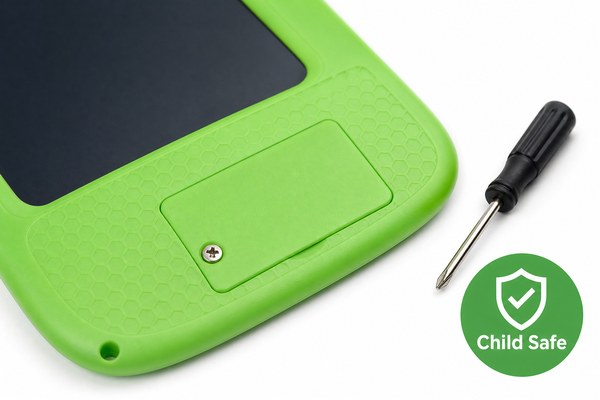
Most LCD writing tablet battery compartments are not automatically safe for young children. Safety depends on the screw-lock design, battery type, and certifications the product carries. A properly designed compartment needs a tool to open it, keeping small batteries away from little hands.
I have spent years working closely with the team at GY-industries in Shenzhen. I have seen firsthand how battery compartment design decisions get made during product development. Some choices protect children well. Others fall short. In this article, I want to walk you through what actually makes a battery compartment safe. I will share real examples from the factory floor. By the end, you will know exactly what to look for before buying or sourcing an LCD writing tablet for young children.
Why the Battery Compartment Design Matters More Than You Think
Many parents assume all kids’ tablets are safe. That assumption can lead to serious accidents. Design details make all the difference.
A battery compartment without a screw lock is a risk. Young children can pop it open easily. Button cell batteries are small enough to swallow. A swallowed button cell can cause severe internal burns within two hours of ingestion.
I remember visiting the GY-industries production line in Shenzhen for the first time. I watched a quality inspector test a sample tablet. She pressed the battery door with her thumb. It popped right open. She flagged it immediately. That unit failed the internal check. The team went back and redesigned the latch. They added a recessed Phillips screw. After that change, the compartment needed a small screwdriver to open. A toddler simply cannot do that. That one design fix made a huge difference. It was a small change on the drawing. But it changed the safety story completely for every parent who bought that product.
Battery Compartment Design Features Compared
| Design Feature | Child-Safe? | Common On | GY-industries Standard |
|---|---|---|---|
| Snap-open latch | No | Budget tablets | Not used on children’s models |
| Screw-lock cover (Phillips) | Yes | Certified children’s products | Standard on all kids’ SKUs |
| Recessed screw head | Yes | Premium children’s tablets | Available in OEM/ODM designs |
| No battery door (USB rechargeable) | Best option | Modern LCD tablets | Offered as ODM upgrade option |
What Certifications Tell You About Battery Safety
A colorful package can look safe and still be dangerous. Certifications are the real proof. Not all tablets carry them.
Look for CE, RoHS, and CPC certifications on any LCD writing tablet sold to children. These marks mean the product has been independently tested. They confirm the battery compartment and materials meet strict child safety standards in the EU and US markets.
I have talked with buyers from toy retail chains in Europe. They told me the same thing every time. They will not put a children’s product on shelf without CPC documentation. The US Consumer Product Safety Commission requires this certificate for children’s products. GY-industries carries CE, RoHS, and CPC certifications. I have walked through the certification process with the compliance team in Shenzhen. It is thorough. Battery compartment integrity is a specific test point. The compartment must resist a defined level of force before inspectors approve it. I have seen tablets fail this test and get sent back for redesign. Passing that test means something real.
Key Certifications and What They Cover
| Certification | Region | What It Tests | GY-industries Status |
|---|---|---|---|
| CE | European Union | Electrical safety, mechanical safety | Certified |
| RoHS | EU & Global | Hazardous materials in components | Certified |
| CPC | United States | Children’s product safety, battery access | Certified |
| ASTM F963 | United States | Toy safety including battery compartments | Available on request |
How OEM and ODM Customisation Affects Child Safety
Brands often customise LCD writing tablets for their market. But customisation can accidentally reduce safety. I have seen it happen.
When you customise an LCD writing tablet through OEM or ODM, battery compartment safety must stay a fixed requirement. Changing the casing shape or colour is fine. But removing a safety screw to cut costs puts children at risk and can fail certification audits entirely.
I worked with a brand that wanted to redesign the back panel of their children’s LCD tablet. They wanted a sleeker look. Their design removed the screw from the battery cover. It was a style decision. The factory flagged it straight away. I explained the problem clearly. Without that screw, the product would fail CPC testing. It would also be rejected by major retailers. We found a middle ground. The screw was kept but recessed deeper into the casing. It looked cleaner. It still met safety standards. The GY-industries OEM/ODM service team reviews safety requirements at every design stage. That review process exists to catch exactly these kinds of problems before they become expensive mistakes.
OEM Customisation Options and Safety Impact
| Customisation Type | Affects Battery Safety? | Recommended Approach | GY-industries Support |
|---|---|---|---|
| Colour and finish change | No | Safe to customise freely | Full support available |
| Casing shape redesign | Possibly | Keep screw-lock intact | Engineering review included |
| Battery type change (AAA to button cell) | Yes — high risk | Avoid button cells for children’s models | Factory will advise against it |
| Switch to USB rechargeable | Yes — improves safety | Best option for child safety | Available as ODM upgrade |
Conclusion
Battery compartment safety is not automatic. It takes smart design and proper certification. Contact GY-industries today to build a safer LCD writing tablet for children.