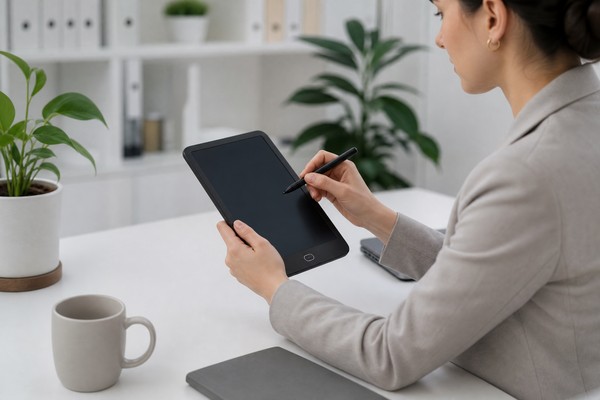
Overview: Why button batteries are used in LCD writing tablets
Button (coin-cell) batteries are compact energy sources commonly used in low-power products such as LCD writing tablets. These batteries enable long standby times and simple designs—advantages valued by educators, retailers and B2B customers sourcing devices in wholesale quantities. For background on display technology used in these devices, see Wikipedia: Liquid-crystal display.
The safety risk for children
| Hazard | Likelihood (children <5) | Potential harm | Caregiver / Retail guidance | Manufacturer / B2B recommendations |
|---|---|---|---|---|
| Swallowing a loose button battery | High | Rapid tissue burns, esophageal injury, possible fatality | Keep batteries out of reach; immediate ER/poison control if ingestion suspected | Use sealed or screw-secured battery compartments; include clear warning labels and age recommendations |
| Accessible battery compartment (loose or weak latch) | Moderate | Increased ingestion risk; choking | Inspect toys regularly; avoid buying damaged devices; store safely | Design for tamper resistance; implement torque/screw requirements for compartments; provide QC checks |
| Button battery visible in packaging or demo units | High in retail/demo settings | Easy access by children in stores or classrooms | Supervise demos; place powered samples out of reach; train staff on risks | Ship demo units with batteries removed or taped; provide secure retail display options and staff training materials |
| Discarded/loose spent batteries in homes | High | Household exposure; multiple ingestion incidents | Store and recycle spent cells safely; use sealed containers; educate family members | Include disposal guidance, recyclers list, and bulk secure packaging for B2B clients |
Although button batteries are small and convenient, they pose a significant hazard if swallowed or inserted into the nose or ear. When a button battery becomes lodged in the esophagus, it can generate an electrical current that triggers rapid tissue damage and chemical burns within hours.
Young children (under age 5) are at highest risk because they explore with their mouths and are more likely to access loose batteries or unprotected compartments.
Recognizing symptoms
Symptoms of ingestion may be non‑specific: drooling, coughing, vomiting, chest pain, difficulty swallowing or refusal to eat. Because immediate tissue injury can occur, any suspicion of swallowing a button battery should be treated as an emergency.
Immediate steps if ingestion is suspected
- Do not induce vomiting or give food or fluids unless instructed by a medical professional.
- Seek emergency medical care immediately. Imaging (X-ray) is required to locate the battery and determine removal method.
- Contact Poison Control or local emergency services for guidance.
Design and purchasing strategies to reduce risk
Manufacturers and buyers—especially schools, daycare centers and retailers ordering in bulk—can reduce risk through design choices and procurement criteria.
For OEM/ODM manufacturers
As an experienced OEM/ODM manufacturer of LCD writing tablets, consider incorporating these safety features:
- Secured battery compartments with tamper‑resistant screws or clips.
- Positive locking mechanisms that require tools to open.
- Rechargable power options to eliminate disposable button cells entirely.
- Clear labeling and child-safety warnings on packaging and the product itself.
For wholesale buyers and institutional purchasers
When sourcing LCD writing tablets in wholesale quantities, specify child-safety features in your purchase order and request safety test documentation.
Consider models that use secure compartments or alternative power systems to reduce the presence of loose button batteries in classrooms or play settings.
For product lifecycle considerations, you can review battery longevity information such as How long does one battery last in an LCD writing tablet? and technical details in What type of battery does an LCD writing tablet use?.
Balancing safety with product performance
LCD writing tablets offer energy-efficient, paperless interfaces for education and corporate training. Their low power draw and long battery life make them attractive for bulk procurement; however, safety must not be an afterthought.
Choose designs that minimize child access to batteries and that are robust against common classroom wear—if you want guidance on longevity and maintenance, see Can a scratched LCD writing tablet screen be repaired?.
Related health considerations
While button batteries represent an acute ingestion hazard, other safety aspects of screen-based devices include visual ergonomics. Brief, planned breaks and proper viewing distance help reduce eye strain associated with digital devices; for clinical guidance on digital eye strain, see sources such as the NIH: Digital Eye Strain and the American Academy of Ophthalmology guidance.
Regulatory and best-practice recommendations
Manufacturers and distributors should follow applicable toy and product safety standards in target markets, implement child-resistant packaging, and maintain clear instructions for safe battery replacement and disposal. For institutional customers, staff training and secure storage of spare batteries are simple, effective risk controls.
Conclusion
Button batteries are not inherently unsafe when used properly, but they become dangerous when accessible to children.
For B2B buyers and OEM/ODM manufacturers of LCD writing tablets, safety is a design and procurement priority: choose devices with secure battery compartments, consider rechargeable models, and enforce safe storage and training protocols.
If you need product guidance, customization, or compliance support for high-volume orders, our team can help.
Wholesale or OEM/ODM inquiries: Contact our sales team to discuss child-safe designs, bulk pricing, and customization options for LCD writing tablets built to meet your market’s safety standards.
For wholesale pricing and OEM customization details, visit our product catalog or contact our sales team directly.
For wholesale pricing and OEM customization details, visit our product catalog or contact our sales team directly.
