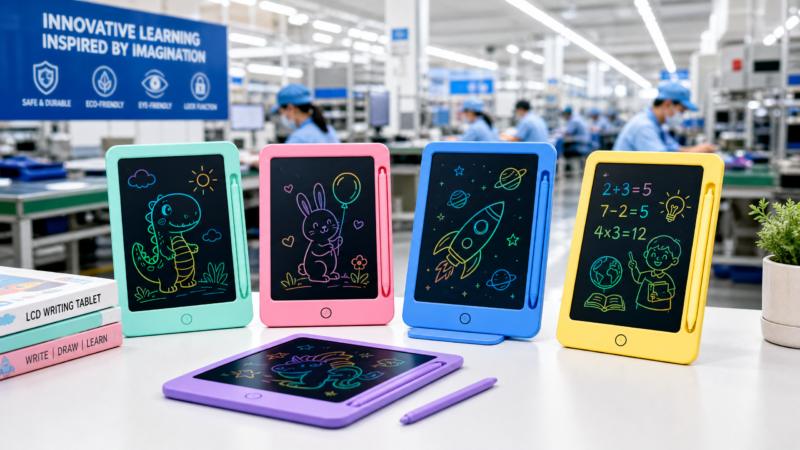
This article is written for importers, distributors, educational suppliers, stationery retailers, brand owners, and OEM customers. Start with the LCD writing tablet replacement parts product page, then review the GY-Industries product catalog for related options.
What problem is the buyer actually trying to solve?
Wholesale buyers should begin with the user, setting, channel, and commercial purpose. A classroom product, a travel product, a stationery item, a gift item, and a private-label product may use a similar physical platform but require different decisions about size, package, accessories, artwork, service, and inventory. A clear use case prevents a buyer from choosing only by photograph or unit price.
Write a one-sentence product job before requesting a quotation. Then list the fixed requirements and the flexible options. Fixed requirements may include dimensions, product type, writing area, color, power method, accessory list, package language, or delivery destination. Flexible options may include logo position, shell color, printed box, mixed-color quantity, instruction language, or a new shape. This distinction makes the sourcing conversation more accurate.
Which facts should be confirmed from the catalogue?
Confirm the product dimensions, housing material, product color, writing or display area, erase method, controls, battery or power arrangement, included accessories, retail package, carton quantity, gross weight, and lead-time range. Ask which facts are standard and which require an approved sample or quotation. Never transfer a feature from one model to another because the products look similar.
Product photographs are useful for appearance, but they do not replace the specification sheet. If a pen, stand, eraser, card pack, cable, battery, calculator, or package is shown, confirm whether it is included in the selected configuration. Keep the final online description, quotation, approved sample, and inspection record aligned.
How should the channel affect the product decision?
Retail buyers should review shelf presentation, package language, barcode space, color balance, customer questions, and the price ladder. Education buyers should review classroom workflow, storage, distribution, maintenance, replacement parts, and whether users can operate the item without lengthy training. Distributors should review SKU separation, carton data, sample records, reorder stability, and the clarity of the product family.
OEM buyers should separate a standard platform from development work. A logo or package change may be relatively simple, while a new housing, mould, electronic function, card content, or structural change may require additional engineering, sampling, testing, and approval. The commercial plan should reflect that difference.
How should suppliers be compared?
| Area | Buyer questions |
|---|---|
| Configuration | What is the exact model, size, shape, material, color, writing area, and control layout? |
| Contents | Which pens, erasers, batteries, cables, stands, cards, books, packages, or accessories are included? |
| Customization | Can the buyer change logo, color, artwork, packaging, content, accessories, or shape? |
| Quality | Which sample, drawing, artwork file, specification sheet, and defect standard control production? |
| Planning | What quantity, carton data, destination, inspection, and lead-time range should be quoted? |
How should a buyer run sample approval?
Review the complete selling unit rather than only the main product. Check the finish, edges, buttons, writing response, erase function, accessory fit, battery compartment, stand or holder, package protection, printed instructions, labels, and visible artwork. If the product will be sold to children, review the intended age position and destination-market labeling with the responsible compliance team. Battery-operated toys and magnetic products can have additional requirements in some markets, so the buyer should verify the final configuration instead of relying on a generic claim.
Record the result in an approval sheet. Separate confirmed points from open points. If a color, package, accessory, card set, or logo is still pending, mark it as pending. This avoids the common mistake of treating a concept image as the approved production standard. The approved sample should be dated and retained for inspection and repeat orders.
How should buyers compare cost and delivery risk?
Compare the complete delivered program. Include sample and setup charges, artwork or tooling, package materials, carton quantity, gross weight, freight, destination charges, inspection, replacement stock, and storage. Ask what changes if the buyer selects several colors, a new package, a different accessory list, or a different shipping method. A lower unit price may not be the lower total cost if the package is unsuitable or the carton plan creates avoidable freight.
Keep timing realistic. A standard product, a logo-only project, a package revision, a custom content project, and a new mould are different project types. Ask when the lead-time range starts and what approvals are required before production. For seasonal programs, reserve time for sample revision and artwork correction rather than planning only around the factory production window.
What should be included in the reorder file?
Keep the approved sample, final specification, quotation, artwork, package files, instruction language, accessory list, carton marks, inspection notes, and the approval date in one file. Record which parts are standard and which parts were created for the buyer. Before a repeat order, ask whether material, battery, accessories, artwork, color, package, carton quantity, or production process has changed.
A controlled reorder file protects product content as well as purchasing. It keeps the product page, sales sheet, package, customer-service answer, and inspection reference aligned. If a new version is introduced, give it a separate internal reference instead of silently changing the old listing.
Buyer checklist
- Define the end user, application, market, channel, and target quantity.
- Confirm dimensions, material, colors, controls, power, accessories, and packaging.
- Separate catalogue facts from quotation-dependent customization.
- Request a complete sample and approve it in writing.
- Confirm artwork, barcode, language, carton data, inspection, and delivery assumptions.
- Keep the approved sample and files for future reorders.
Product-specific sourcing notes for Lcd Writing Tablet Replacement Parts
This article applies to the Lcd Writing Tablet Replacement Parts product page, not to a generic category. Buyers should use the exact page configuration when requesting a quote, reviewing a sample, preparing packaging, and approving a repeat order. The page currently identifies the product as Lcd Writing Tablet Replacement Parts.
Before production, confirm the following details against the approved sample and quotation: the exact product size, material, color, function, included accessories, package contents, carton information, and lead-time range shown or confirmed for this product.
The product should be evaluated in its intended setting. For a school or education order, review daily handling, storage, distribution, cleaning or care, and replacement needs. For retail or wholesale, review the package message, barcode space, color or size assortment, carton efficiency, and the questions customers are likely to ask. For OEM or private label, confirm which changes apply to this product and which would require a new sample or engineering review.
Do not transfer a specification from another GY-Industries model. Use this product page, the final quotation, and the approved sample as the controlling references.
Frequently asked questions
Can this product support a private-label program?
Options depend on the selected configuration. Confirm logo, color, artwork, packaging, accessories, quantity, sample approval, and any destination-market requirements before production.
Can buyers request a new shape or product version?
A new shape or version should be treated as a separate development request. Ask for feasibility, tooling, sample, cost, timing, and ownership terms before approval.
How should two supplier quotations be compared?
Compare the same product configuration, accessory list, package level, quantity, delivery terms, sample standard, and inspection plan. Do not compare unit price alone.
What should be retained after approval?
Retain the approved sample, specification, artwork, package files, accessory list, quotation, and inspection notes.
How should a buyer prepare for a repeat order?
Compare the new quotation with the approved reference and ask whether any component, package, accessory, artwork, color, or process has changed.
Request a product quotation
Send the target market, quantity, product link, colors, artwork, packaging, accessories, and sample requirements.
How should buyers plan the product assortment?
A product should be evaluated as part of an assortment, not only as a single unit. A retailer may need an entry model, a standard model, and a higher-value model. A school supplier may need one durable configuration that is easy to issue and replace. A distributor may need several colors or sizes that share a common sales explanation. The product family should be easy for a sales representative to explain in one short conversation.
Use a simple assortment matrix. Put the product size, user, main application, package level, color range, and expected price position in separate columns. Then identify overlap. If two items solve the same problem and have no clear difference, the assortment may create inventory confusion. If two items are visually similar but serve different buyers, add a clear message to the package and product page.
What should an importer request from the supplier?
Request the latest specification sheet, a clear product photograph, dimensions, material and color information, included accessories, packaging details, carton quantity, gross weight, sample terms, production terms, and the known customization options. Ask the supplier to mark any item that is not yet confirmed. This is more useful than requesting a general statement that the product can be customized.
For products used by children, ask the responsible compliance team to review the intended age grade, battery access, magnets, small parts, warnings, instructions, tracking information, and destination-market requirements. Do not publish a certification claim just because a category commonly uses that claim. The final claim must match the exact product configuration, destination, and supporting documents.
How should buyers compare a stock program with an OEM program?
A stock program normally offers faster selection because the design and basic specification already exist. It can be suitable for a first market test, a distributor sample range, or a time-sensitive campaign. A private-label program may change the logo, package, colors, or documentation while using a proven product platform. A custom OEM or ODM program may change the shape, structure, content, electronics, or industrial design, but it requires more specification work and more approval points.
Choose the simplest structure that meets the commercial goal. If the buyer has not validated demand, a standard platform with controlled branding can reduce development risk. If the buyer has a long-term brand plan and a clear product requirement, custom work may create stronger differentiation. In both cases, write down ownership of artwork, moulds, content, and final files before production.
How can quality risks be reduced before mass production?
Use a sample that represents the complete selling unit. Check more than appearance. Test the writing or learning function, erase or reset operation, buttons, screen or board response, accessory fit, stand or holder, battery compartment, package protection, labels, and instructions. If the order contains several colors, inspect the planned color mix. If the product is part of a classroom or gift program, test the way it is packed, unpacked, stored, and handed to the user.
Write the acceptance points in plain language. Examples include visible scratches, loose accessories, incorrect artwork, missing parts, wrong color, package damage, and mismatch with the approved sample. A written acceptance plan helps the buyer and supplier identify the same problem. It also gives the inspection team a practical reference rather than relying on personal judgment.
How should packaging support conversion?
Packaging should explain the product without making unsupported claims. The front panel can identify the product type and main use. The side or back panel can show dimensions, included items, care information, brand details, barcode space, and destination-market information where required. Keep package copy aligned with the approved specification. If the photograph shows an accessory that is not included, change the photograph or clarify the contents.
For wholesale, package decisions also affect carton efficiency. Confirm the retail pack size, master carton quantity, gross weight, carton marks, pallet or shipment plan, and protection around corners and screens. A package that looks attractive but creates excessive void space may increase freight and storage cost. A simpler package may be better for a school program, while a gift or retail program may need stronger visual communication.
What should the reorder and content-control process look like?
After the first shipment, record customer questions, damaged parts, package feedback, color performance, and the reasons for returns. Use this information to improve the next order, but do not silently change the product. Any change to material, battery, accessory, artwork, package, or function should be recorded and approved. Give a changed version a new internal reference when the difference could affect the customer experience.
Keep the website, product catalog, sales sheet, quotation, package, instruction file, and customer-service script synchronized. This is especially important for products that appear in several sizes or colors. Clear content reduces buyer uncertainty and protects the trust built during the first order. It also makes the next sales conversation faster because the purchasing team can reuse a controlled record.
A practical decision sequence for buyers
First define the user and channel. Second confirm the exact catalogue configuration. Third list required customization. Fourth compare the complete delivered cost. Fifth request and inspect the complete sample. Sixth approve artwork, package, and written specification. Seventh confirm inspection and delivery assumptions. Eighth keep the approved reference for repeat orders. This sequence is simple, but it prevents many avoidable disputes because it turns vague expectations into documented decisions.
The final choice should be the product that fits the buyer’s actual program. A larger board is not automatically better for a travel channel. More colors are not automatically better for a school tender. A custom shape is not automatically better for a first test order. The best option is the one that provides a clear customer benefit while remaining controlled in specification, package, cost, quality, and future supply.
What should the buyer include in the first inquiry?
A useful inquiry can be short, but it should contain the information that changes the quotation. State the target country, customer group, application, product link, required quantity, preferred colors, package level, logo or artwork, accessory list, sample requirement, and expected delivery window. If the buyer is comparing several models, list the models separately and explain the role of each one. This allows the supplier to respond with a controlled comparison instead of a broad catalogue reply.
Ask the supplier to highlight what is confirmed and what is conditional. A conditional item may depend on order quantity, artwork approval, tooling, content development, packaging, or destination-market review. This language is not a weakness. It is a practical way to keep the project honest and avoid treating an early concept as a finished product.
How can a buyer prepare the sales team?
Before launch, give the sales team a one-page product fact sheet. It should include the approved product name, dimensions, colors, included items, package contents, main use, supported customization, lead-time range, and the correct inquiry route. It should also include a short list of claims that must not be made without written confirmation. This prevents one sales channel from promising a feature that belongs to a different configuration.
For a product family, prepare a comparison sheet with the same fields for every model. A buyer can then see the difference between sizes, colors, accessories, and package levels. Consistent fields also help retailers create better listings and help distributors answer questions without repeatedly asking the factory for basic information.
How should the project be closed after delivery?
After the shipment arrives, inspect a reasonable sample of cartons and selling units. Check damage, missing parts, visible defects, artwork, package quantity, color, and the match with the approved reference. Record the result with photographs and notes. If an issue appears, separate affected stock and communicate the product reference, batch information, quantity, and evidence clearly.
Close the project with a short review. Record what worked, what created questions, what customers liked, and what should change in the next order. This review can improve the package, product page, sales script, and reorder file without changing the product silently. A controlled learning loop is especially useful for seasonal educational products and private-label programs.