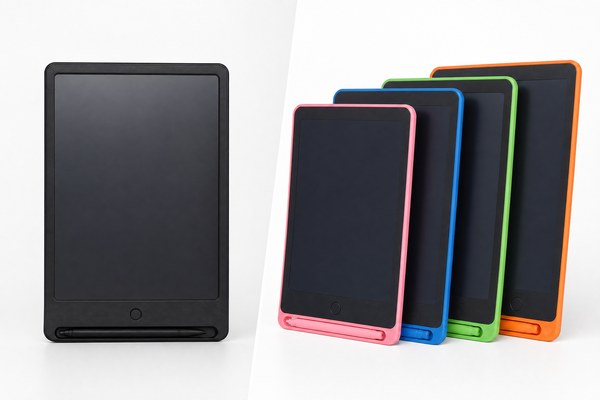
Evaluating the price difference between standard monochrome and colorful LCD writing tablets requires examining material compositions, liquid crystal film structures, and manufacturing processes rather than relying on generic pricing models.
While standard models utilize single-layer films optimized for basic writing clarity, multi-layer chromatic options involve advanced optical film laminations that naturally influence overall production expenditure and wholesale positioning.
Core Manufacturing Drivers Behind Standard and Colorful LCD Tablets
When procurement managers compare standard monochrome writing boards with vibrant multi-color display alternatives, understanding the underlying material differences is essential for effective sourcing.
Standard monochrome writing tablets feature a straightforward single-layer liquid crystal display structure that delivers high contrast and reliable pressure sensitivity with minimal raw material complexity and streamlined assembly workflows.
Conversely, colorful LCD writing tablets incorporate advanced multi-layer chromatic filtering films or segmented color zones across the writing panel. This sophisticated layer architecture requires precise optical alignment during lamination and thermal calibration.
Consequently, manufacturing overhead, component sourcing complexity, and production setup time increase, which directly shapes wholesale factory pricing structures for global B2B clients and wholesale distributors.
Furthermore, electronic driver components and circuit board layouts often differ between single-color and multi-color variants to manage distinct voltage requirements and visual output stability under varying operational conditions.
Global distributors reviewing our LCD writing tablet product catalog will find diverse configuration options tailored to different retail price points and consumer demographics across international target markets.
Quality Assurance and Standardized Production Protocols
Maintaining consistent product quality across both monochrome and multi-color product lines requires strict adherence to standardized manufacturing frameworks. Establishing robust quality management systems ensures that screen sensitivity, battery compartment safety, and structural integrity meet international retail standards before bulk shipment.
Adhering to established benchmarks such as ISO 9001 quality-management principles helps OEM and ODM partners minimize defect rates and streamline factory audits. Implementing these foundational practices guarantees that every production batch—regardless of display color technology—maintains reliable durability and uniform tactile feedback for end users.
In addition to internal quality controls, compliance with regional toy safety directives and electromagnetic compatibility standards adds another layer of operational planning. B2B buyers must account for these compliance validation steps when estimating total project timelines and pre-market preparation costs across export destinations.
Evaluating Procurement Factors for Wholesale Sourcing
B2B purchasers must evaluate several operational parameters beyond basic factory gate costs when selecting between standard and multi-color electronic writing tablets. Total delivered cost depends heavily on order volume scale, custom packaging specifications, regional safety compliance testing requirements, and agreed trade terms such as FOB or EXW.
| Evaluation Criterion | Standard Monochrome Model | Multi-Color Display Model | Procurement Impact |
|---|---|---|---|
| Material Complexity | Single-layer liquid crystal film | Multi-layer chromatic filtering film | Affects baseline material cost and optical calibration time |
| Custom Branding | Silk screen printing and molded logo | Custom housing colors and branded retail boxes | Determines minimum order quantities and tooling setup fees |
| Compliance Testing | Standard CE, FCC, RoHS protocols | Expanded toy safety testing (EN71, ASTM F963) | Influences third-party laboratory testing duration and fees |
| Logistics & Packing | Standard master carton configuration | Reinforced retail display packaging | Impacts container volumetric efficiency and shipping calculations |
Managing Customization and Technical Feasibility
When developing proprietary product lines for retail distribution, brand managers frequently inquire about advanced features like rechargeable internal batteries or dual-sided writing surfaces. Feasibility for these specialized modifications depends strictly on comprehensive engineering reviews, structural safety evaluations, and prototype testing.
B2B partners should note that functional upgrades require dedicated sample validation phases to ensure long-term reliability in consumer environments.
Understanding wholesale pricing structures also requires analyzing channel distribution expenses, retail competition, and target market positioning rather than relying on arbitrary percentage margins. Brand owners should assess total landed costs, regional import tariffs, and logistics overhead when forecasting wholesale profitability and retail pricing strategies in competitive markets.
Balancing manufacturing costs with product differentiation enables brands to establish sustainable wholesale partnerships. Careful planning across all operational stages ensures smooth market entry and long-term commercial success.
LCD Writing Tablet Buyer Checklist: The Price Difference Between Standard And Colorful LCD Tablets
Requesting Your Customized OEM and ODM Quotation
To initiate a comprehensive manufacturing evaluation and receive an accurate, tailored proposal for your target market, please contact our OEM/ODM team. Provide your expected order quantity, target market specifications, customized branding or packaging requirements, and project timeline so our engineering and sales departments can prepare a complete, actionable quotation.
