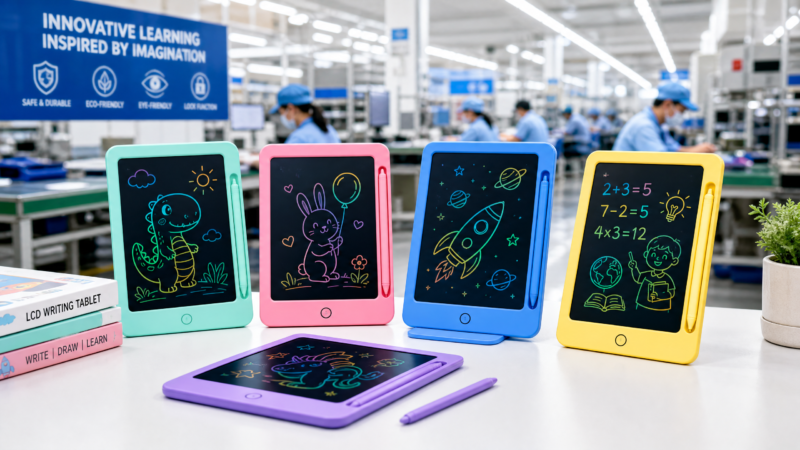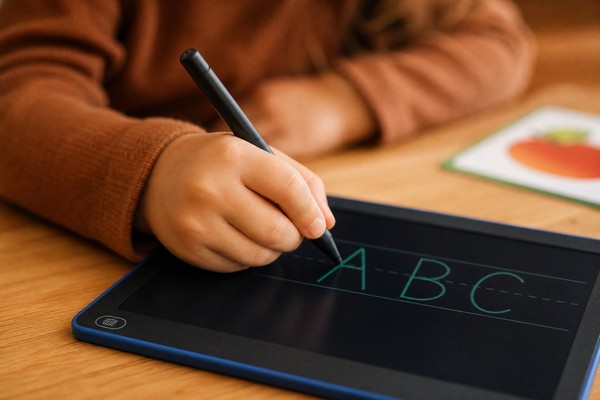
Fine motor skills—the ability to make precise, coordinated movements with the hands and fingers—are foundational to a child’s academic and daily life success. From handwriting to using scissors to tying shoelaces, these skills underpin countless everyday tasks. Toys that actively develop fine motor skills provide measurable developmental value.
The Developmental Window for Fine Motor Skills
According to the CDC’s Developmental Milestones, children develop fine motor skills progressively from birth through age 6. The most critical window for intervention and enrichment is ages 2–5, when the brain’s motor cortex is most plastic and responsive to practice.
How LCD Writing Tablets Develop Fine Motor Skills
| Skill Component | How the Tablet Develops It | Developmental Benefit |
|---|---|---|
| Pincer Grasp | Holding the stylus requires a mature 3-finger grip. | Prerequisite for pencil grip and handwriting |
| Hand-Eye Coordination | Drawing specific shapes requires visual-motor integration. | Improves accuracy in writing and sports |
| Pressure Regulation | LCD screen responds to varying pressure levels. | Develops tactile sensitivity and control |
| Bilateral Coordination | One hand holds the tablet while the other draws. | Builds the two-handed coordination needed for daily tasks |
Occupational Therapy Perspective
Many occupational therapists recommend LCD writing tablets as a low-cost, engaging tool for children who need fine motor skill development. The pressure-sensitive surface provides immediate visual feedback, which is highly motivating for children and accelerates skill acquisition.
GY-industries manufactures LCD tablets with ergonomic styluses designed for small hands. Contact us for product specifications and wholesale pricing.