You want to know who made the first LCD writing tablet. It is hard to find a clear answer. I have searched through many sources to find the truth.
The LCD writing tablet was invented by Kent Displays, a US company, in the early 2000s. They created the first pressure-sensitive LCD writing board using cholesteric liquid crystal technology. This made it possible to write, erase, and reuse without paper or batteries for the display.
I find this story fascinating. The invention changed how people take notes forever. It started with lab research and grew into a global product. Today, millions of these tablets are used in schools, offices, and homes. I have seen the technology evolve from a simple idea into something powerful. Factories like ours in Shenzhen now produce these tablets at scale. The journey from invention to your hands is a long one. Let me walk you through it step by step.
The Origins of the LCD Writing Tablet
Many people do not know where this product came from. That lack of knowledge leads to confusion when buying or sourcing tablets. Understanding the roots helps you trust the product more.
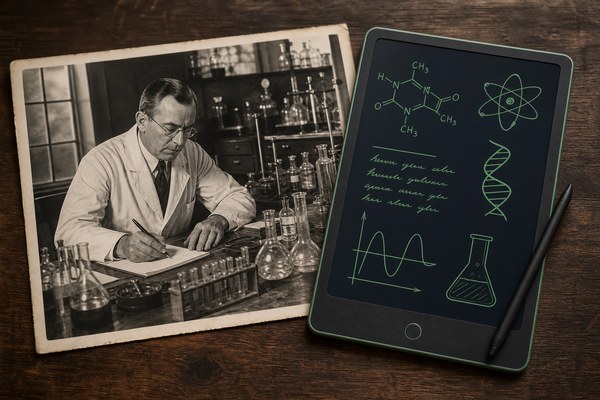
Kent Displays Inc. filed key patents in the late 1990s and early 2000s. Their research team, led by Dr. J. William Doane, developed a bistable liquid crystal material. This material could hold an image without power. That discovery became the foundation of every LCD writing tablet sold today.
I remember when I first learned about this history. I was researching materials for our factory in Shenzhen. I came across the original patent filings from Kent Displays. I was surprised that such a simple-looking product had such deep science behind it. Dr. Doane and his team spent years testing liquid crystal materials. They needed a material that could hold a written image without constant power. When they found it, they knew it was special. That bistable property is still the heart of every LCD writing tablet we produce at GY-industries today. It is elegant in its simplicity.
Key Milestones in Early LCD Writing Tablet History
| Year | Milestone | Key Person / Company | Impact |
|---|---|---|---|
| Late 1980s | Bistable liquid crystal research begins | Dr. J. William Doane | Laid the scientific groundwork |
| 1993 | Kent Displays Inc. is founded | Kent State University spin-off | Commercialization begins |
| Early 2000s | First writing tablet patents filed | Kent Displays Inc. | Protected the core technology |
| 2007 | Boogie Board brand launched | Improv Electronics / Kent Displays | Brought product to mass market |
How the Technology Spread Around the World
A great invention means nothing if nobody can use it. Many early LCD tablets were too expensive. That made it hard for schools and families to buy them.
After the Boogie Board launch in 2007, demand grew fast. Chinese manufacturers began producing OEM versions using the same liquid crystal technology. This drove prices down significantly. More people could afford the tablets. The technology spread from the US into Asia, Europe, and beyond within just a few years.
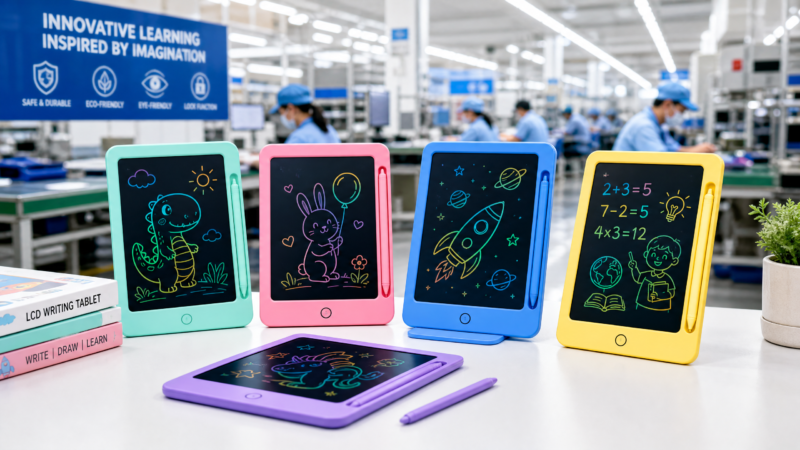
I have seen this shift happen in real time. Our factory in Shenzhen started producing LCD writing tablets as demand from global buyers surged. Buyers wanted quality but also needed competitive pricing. We worked hard to meet both needs. We earned CE, RoHS, and CPC certifications to meet international safety standards. This was important for selling into Europe and the United States. Our OEM and ODM capabilities meant brands could put their logo on a reliable product. The technology that started in a US lab became a global everyday item. I am proud that GY-industries is part of that story. You can learn more at our OEM/ODM service page.
How LCD Writing Tablet Production Grew Globally
| Region | Role in the Supply Chain | Key Contribution | Time Period |
|---|---|---|---|
| United States | Original invention and patents | Core LCD technology | 1990s – 2000s |
| China (Shenzhen) | Mass manufacturing hub | Lower cost, higher volume | 2010s – present |
| Europe | Major consumer market | CE and RoHS compliance demand | 2010s – present |
| Southeast Asia | Growing education market | Strong demand for children’s tablets | 2015 – present |
What Makes the LCD Writing Tablet Technology So Lasting
Some products fade away after a few years. The LCD writing tablet has not faded. People still buy millions of them every year. Why does this technology keep growing?
The LCD writing tablet works without a battery for writing or storing the image. It is light, durable, and easy to use. Children and adults both love it. It reduces paper waste and saves money over time. These benefits keep the product relevant no matter how much technology changes around it.
I have talked to many buyers over the years. Parents love these tablets because they are safe for young children. Teachers use them for quick classroom activities. Office workers use them for fast notes during meetings. I have also seen them used in restaurants as order pads. The simple erase-and-reuse function never gets old. At GY-industries, we produce tablets in many sizes and colors. We customize them for different brands and markets. Our Shenzhen factory handles everything from design to shipping. The liquid crystal display technology behind these tablets is proven and trusted. That gives me confidence every time we ship a new order.
Key Features That Keep LCD Writing Tablets Popular
| Feature | Benefit | Who It Helps Most |
|---|---|---|
| No power needed to display image | Long battery life (erase button only) | All users, especially children |
| Pressure-sensitive writing surface | Natural writing feel | Students and creative users |
| One-button full erase | Fast and simple to reset | Classroom and office users |
| Thin and lightweight design | Easy to carry anywhere | Travelers and remote workers |
Conclusion
Kent Displays invented the LCD writing tablet. Their work changed note-taking forever. Want a reliable OEM partner? Contact GY-industries today for custom LCD writing tablets from Shenzhen.